










- It is as certain that the spawning cod will fill the racks on Røst each winter as that the sun will never set in the middle of summer.
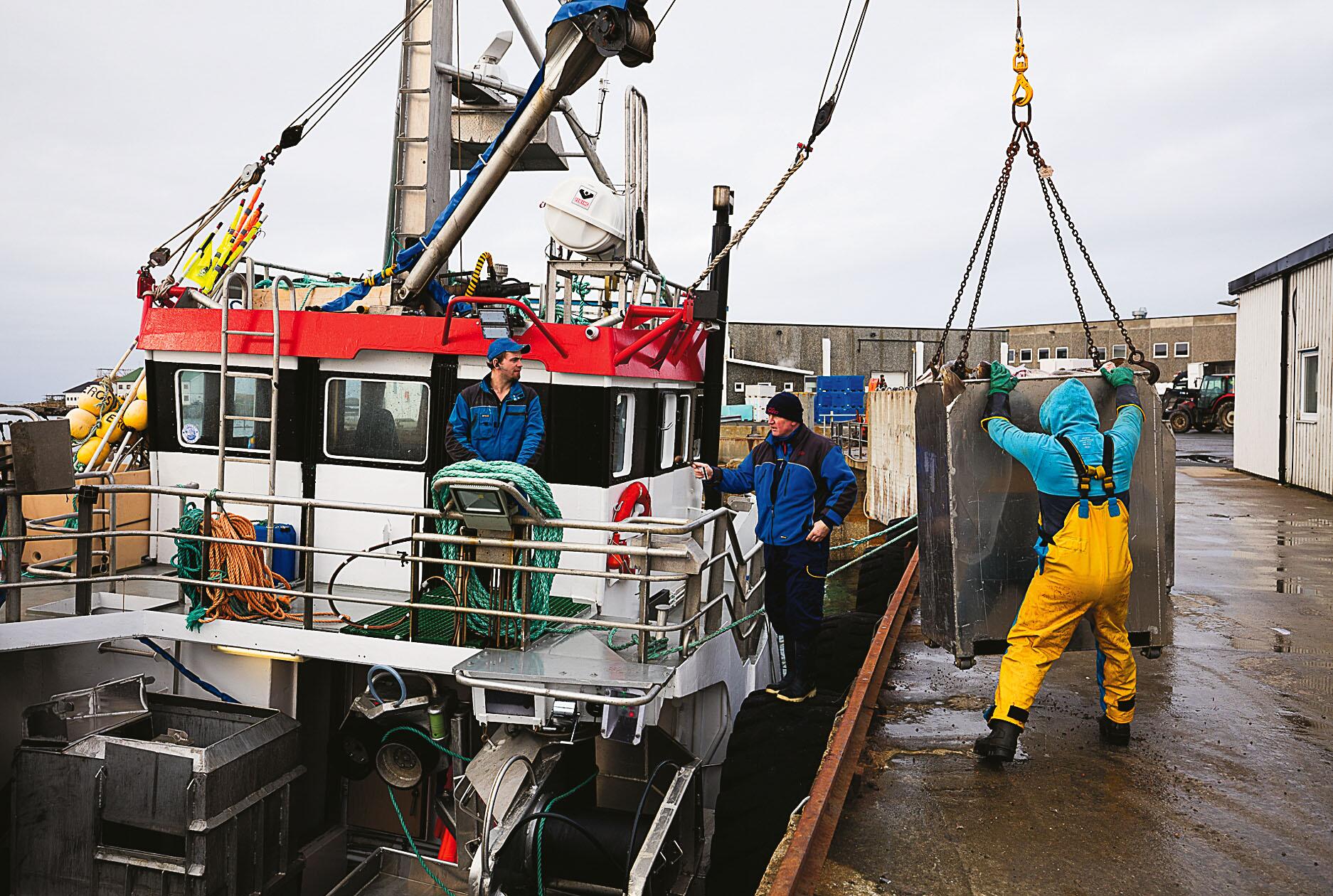
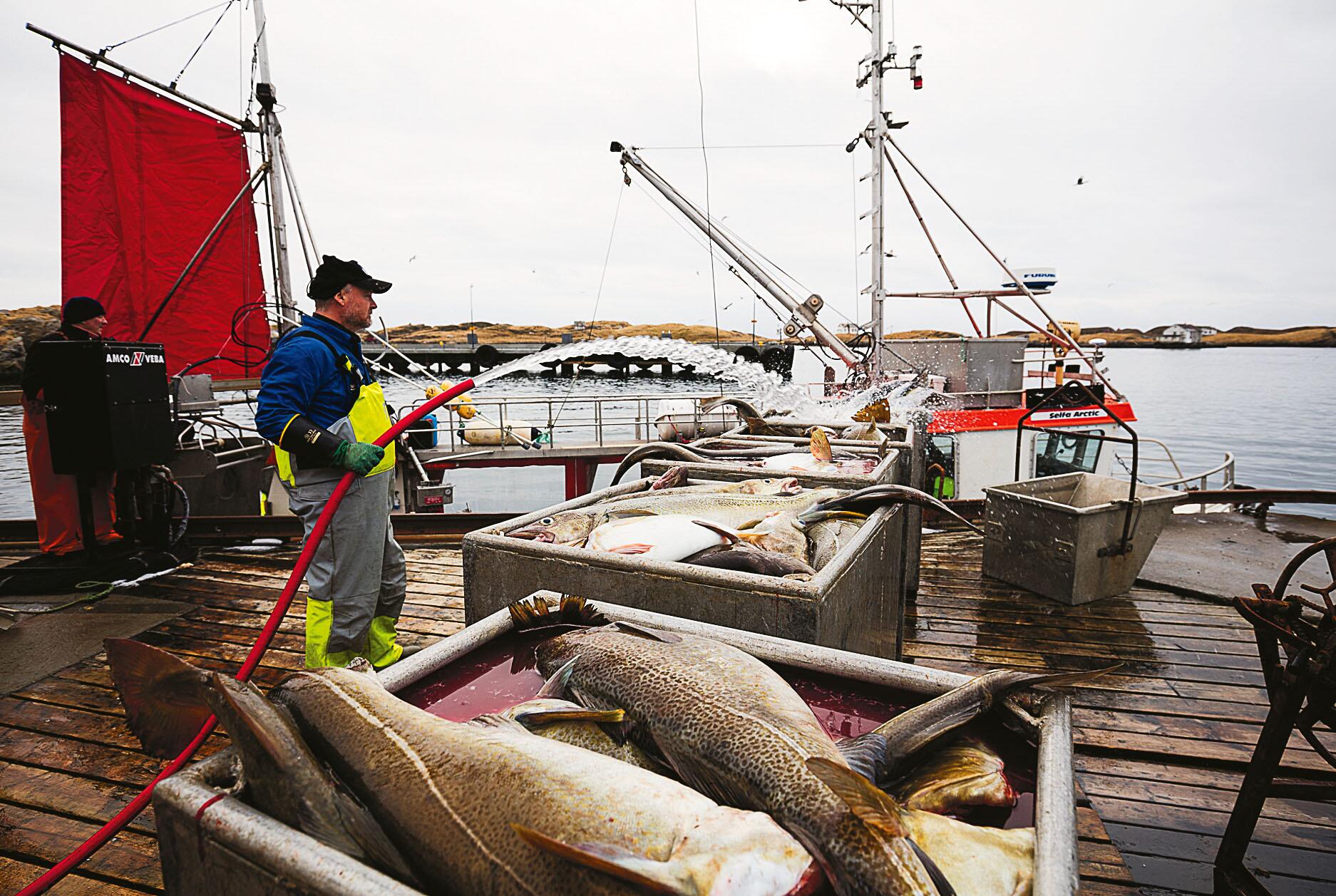
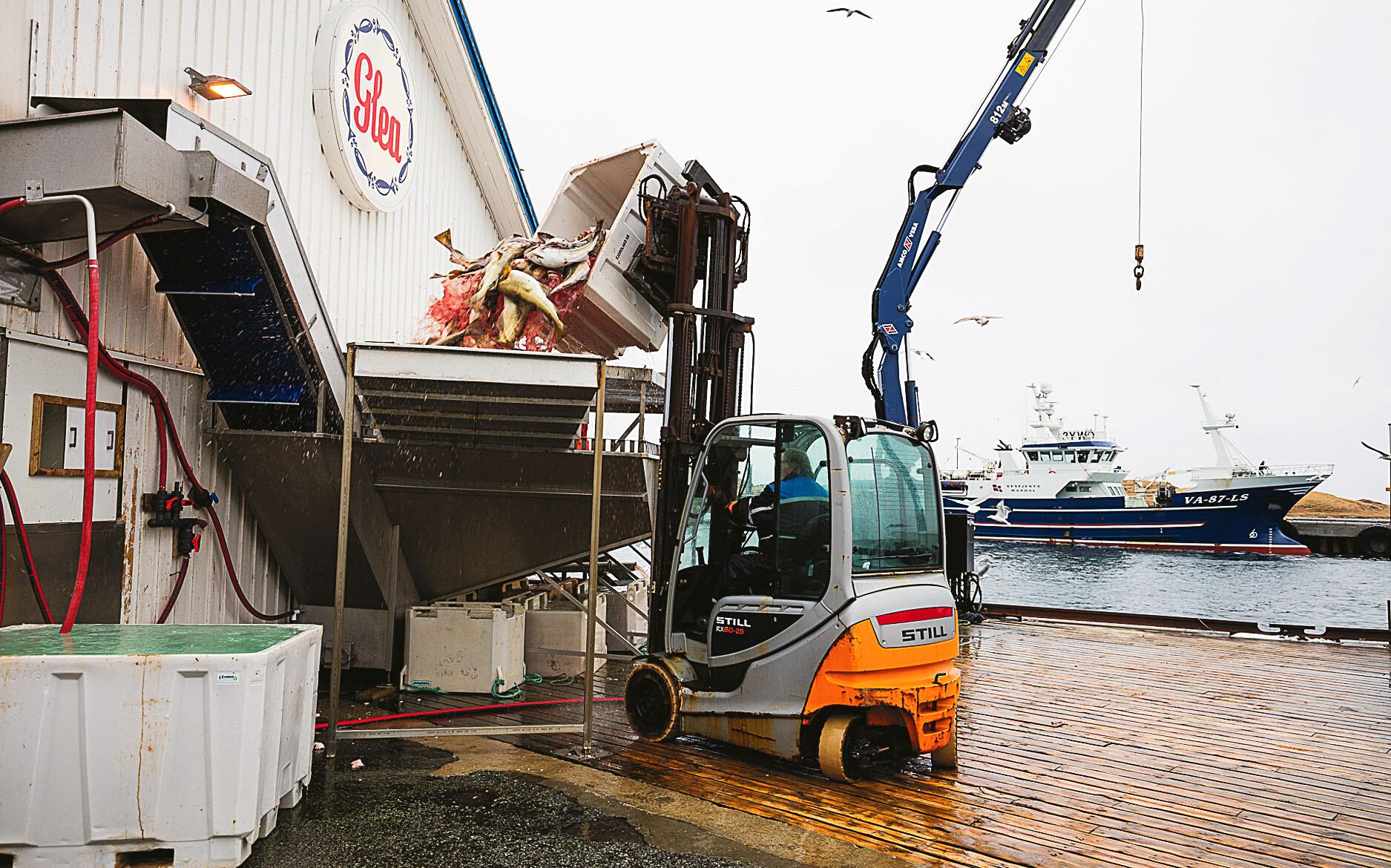
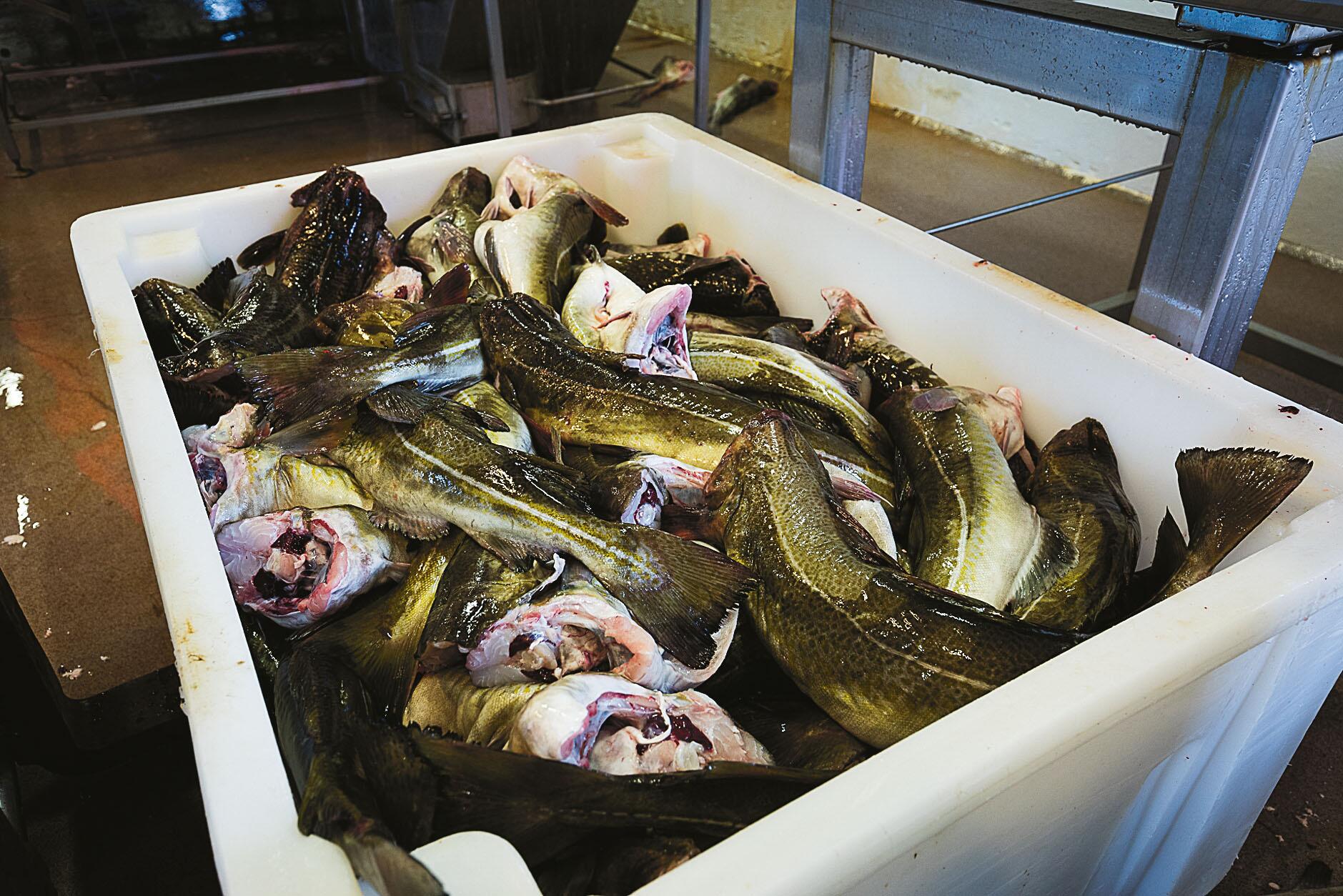
Fishermen, who secure their winter income and work for Røst islanders, travel from many places in Norway to Røst to work with fishermen who fish all year round from the island. At the height of the season as many as 300 to 400 fishing boats can be in operation, the quays packed with small and large fishing vessels, side by side, delivering their catch. 'Eros' is here landing the day‘s catch from Landegode at AS Glea. - The spawning cod is lifted ashore from the boats in containers. Spawning cod is bled as soon as it is brought onboard, and bled again once ashore, both of which are vital to fish quality.
- The forklift truck driver transfers the spawning cod onto a bulk elevator.
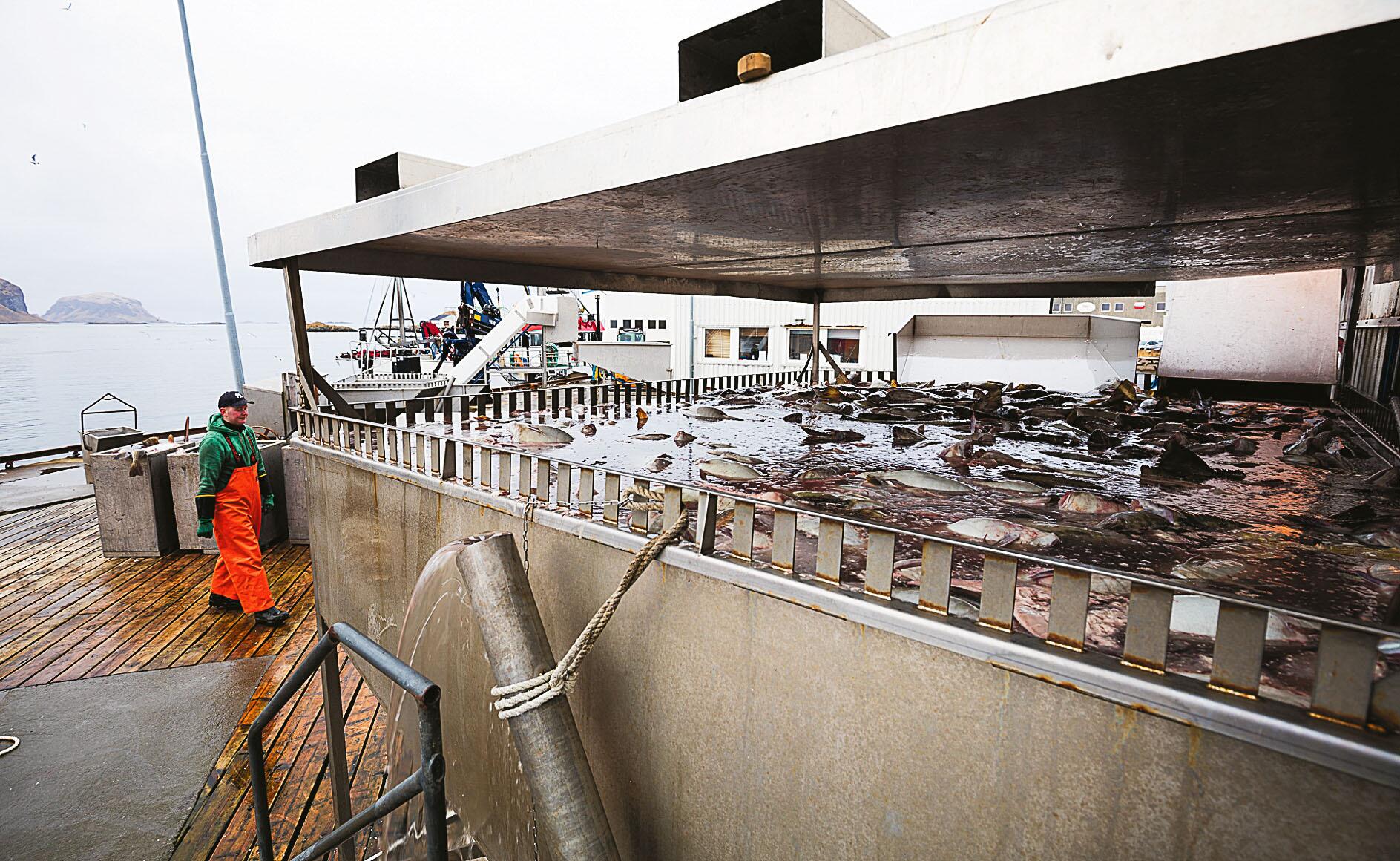
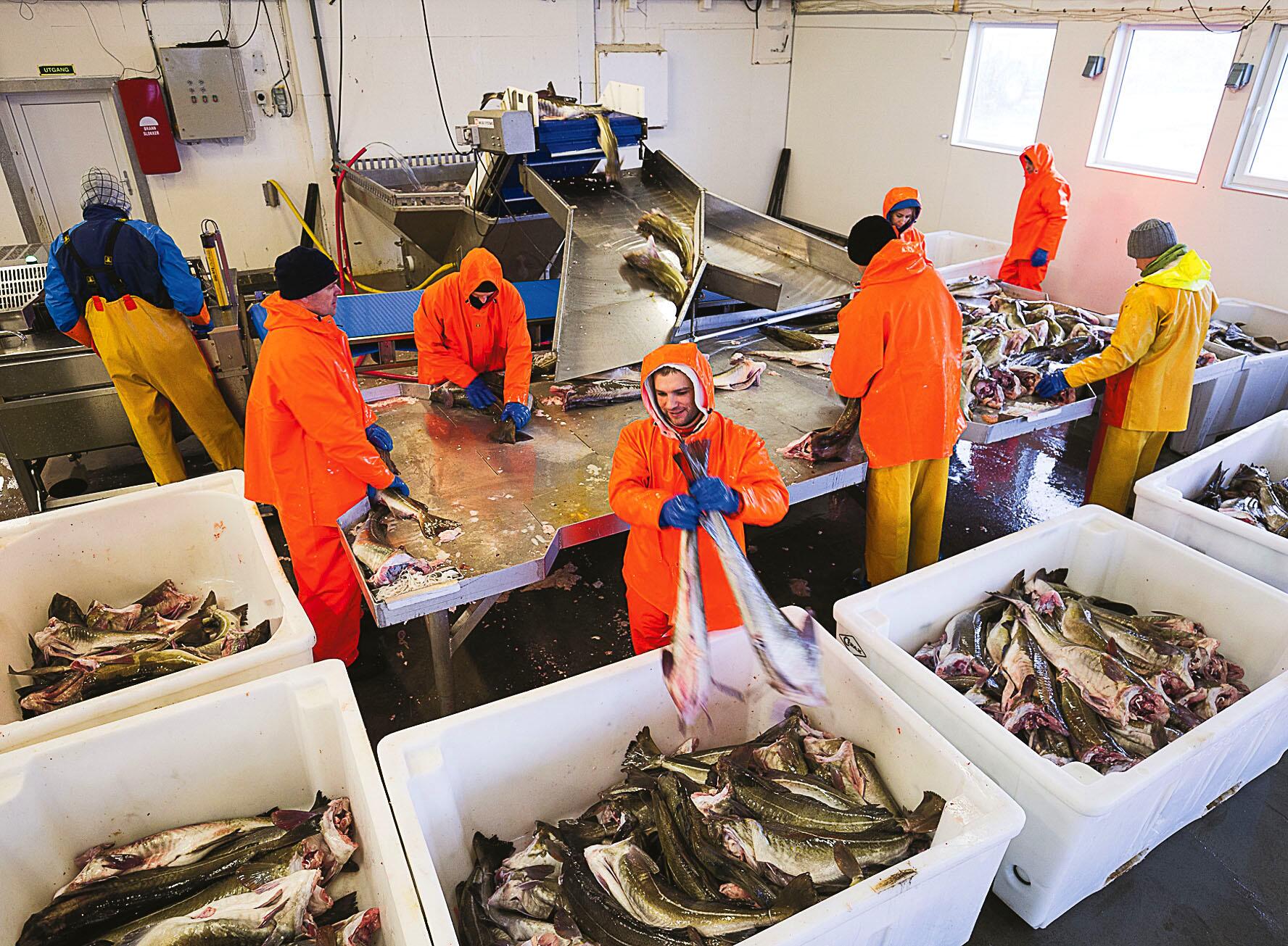
- The fish moves from here onwards via a conveyer belt to the cleaning line in the reception hall.
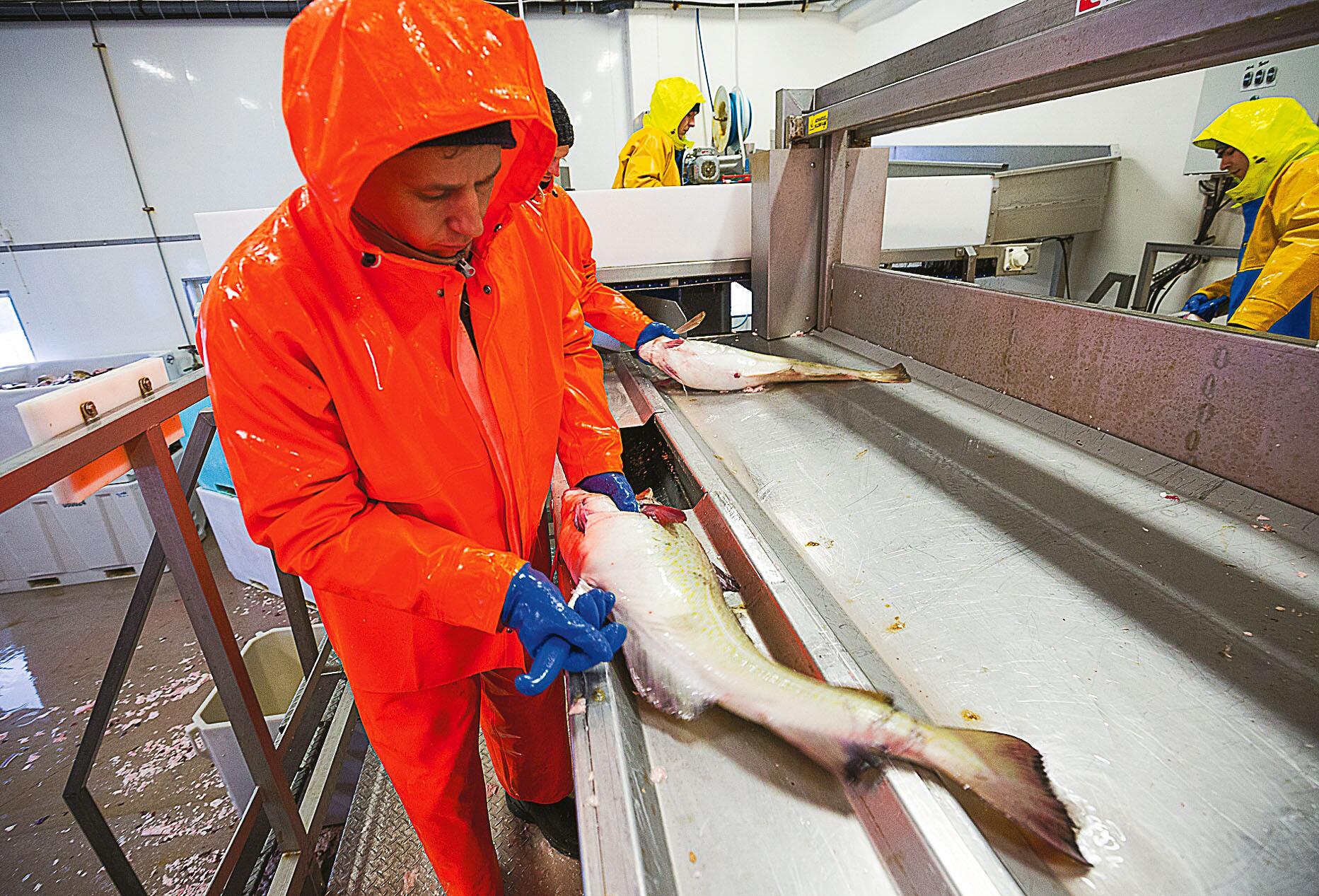
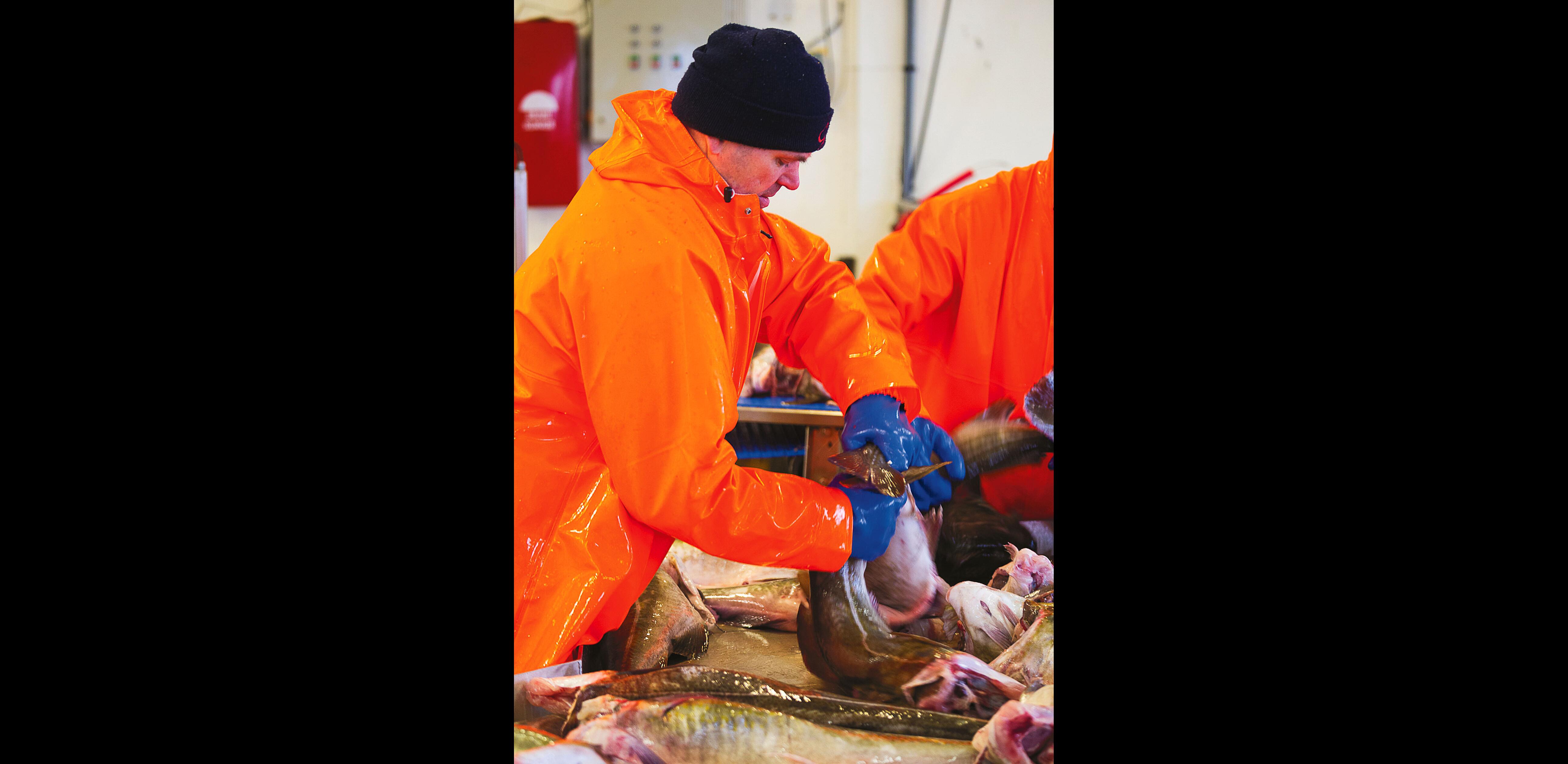
- There is a semi-automated production line for fish cleaning in the reception hall. The fish is cut along the belly from the neck bone and down to the anus. The entails of the fish are then removed and sent to ensilage production, ending up as livestock or fish feed. The roe and liver are sorted into separate bins for human consumption.
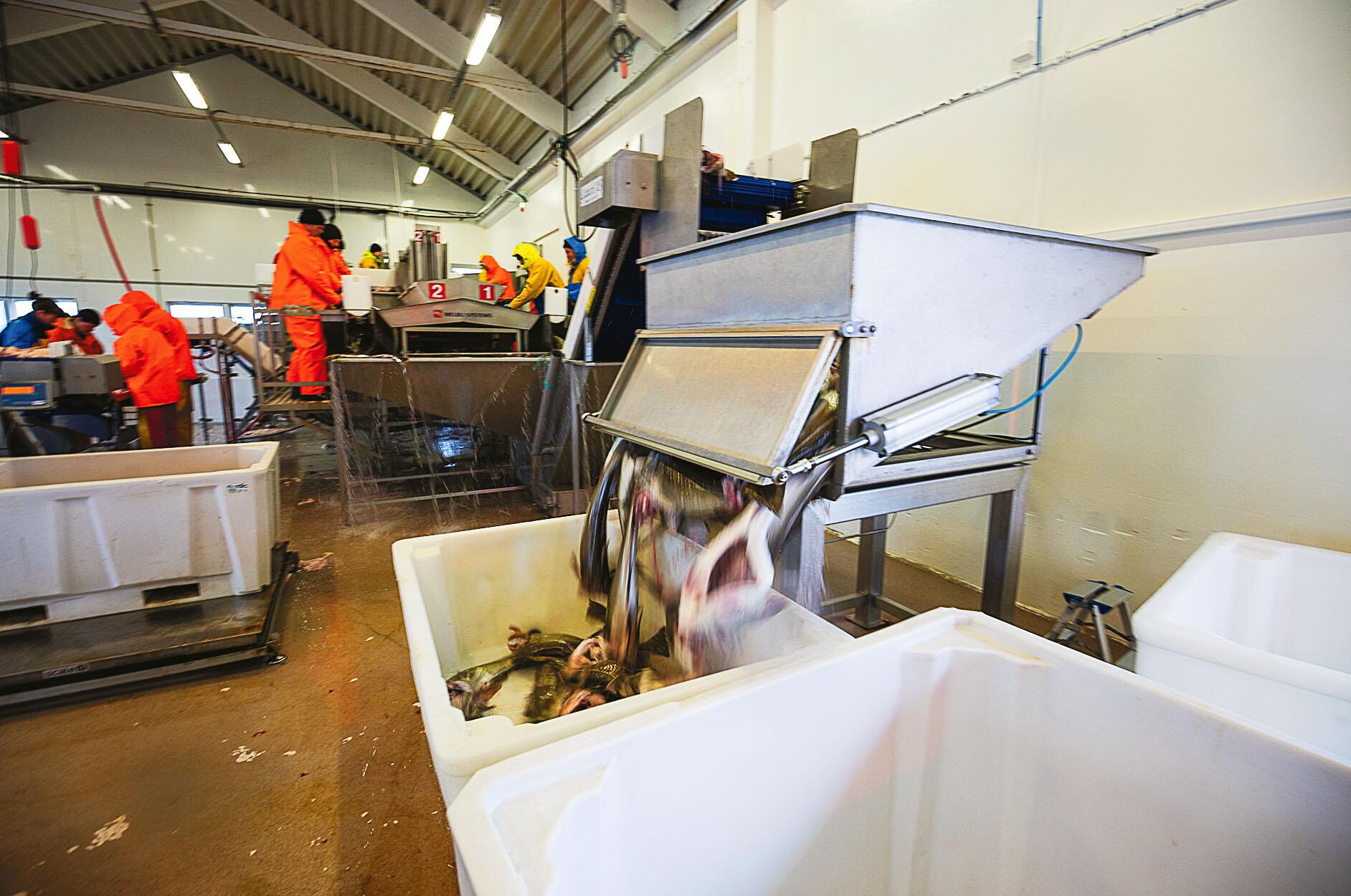
Film of fish cleaning: https://vimeo.com/251138861 - The fish, after being cleaned and gutted, proceeds to automatic weighing and temporary storage on its way onwards.
- Fresh high quality spawning cod is placed in bins ready for the next step. Some of the largest fish are too large to be dried and are sent to salt fish production. The salt fish is then dried and becomes clipfish. Some of the fresh spawning cod is packed in ice in polystyrene boxes and is sent straight to fresh fish markets both at home and abroad. Large quantities are, however, paired and hung on racks.
- The fish are prepared for hanging by two fish of around the same size being tied together by the tail by a string.
- Automated pairing production, which otherwise takes place by hand, is being trialled.
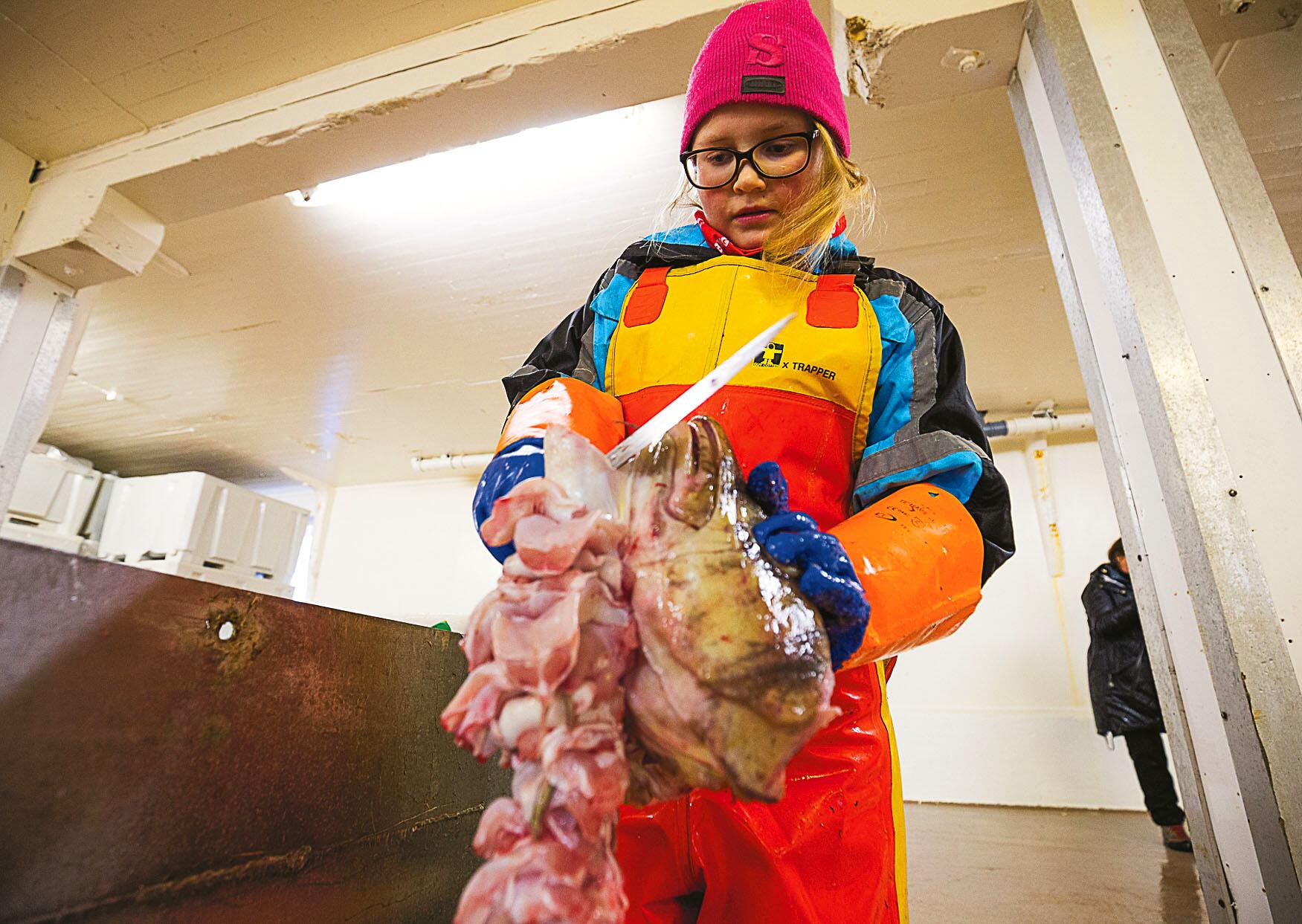
- Cod tongue cutting is a traditional activity and a good source of income for children and youth of the fishing villages of Lofoten. Thora Ekrem is here earning some extra pocket money.
https://en.wikipedia.org/wiki/Cod_fisheries
Original text: Elisabeth Johansen, Anne Cecilie Pedersen, Einar Stamnes (eds.): TØRRFISK – kystkultur, kokekunst, Querini, Orkana 2018.
Translation to English: Alasdair Graham-Brown
Photos and film: Kjell Ove Storvik