


















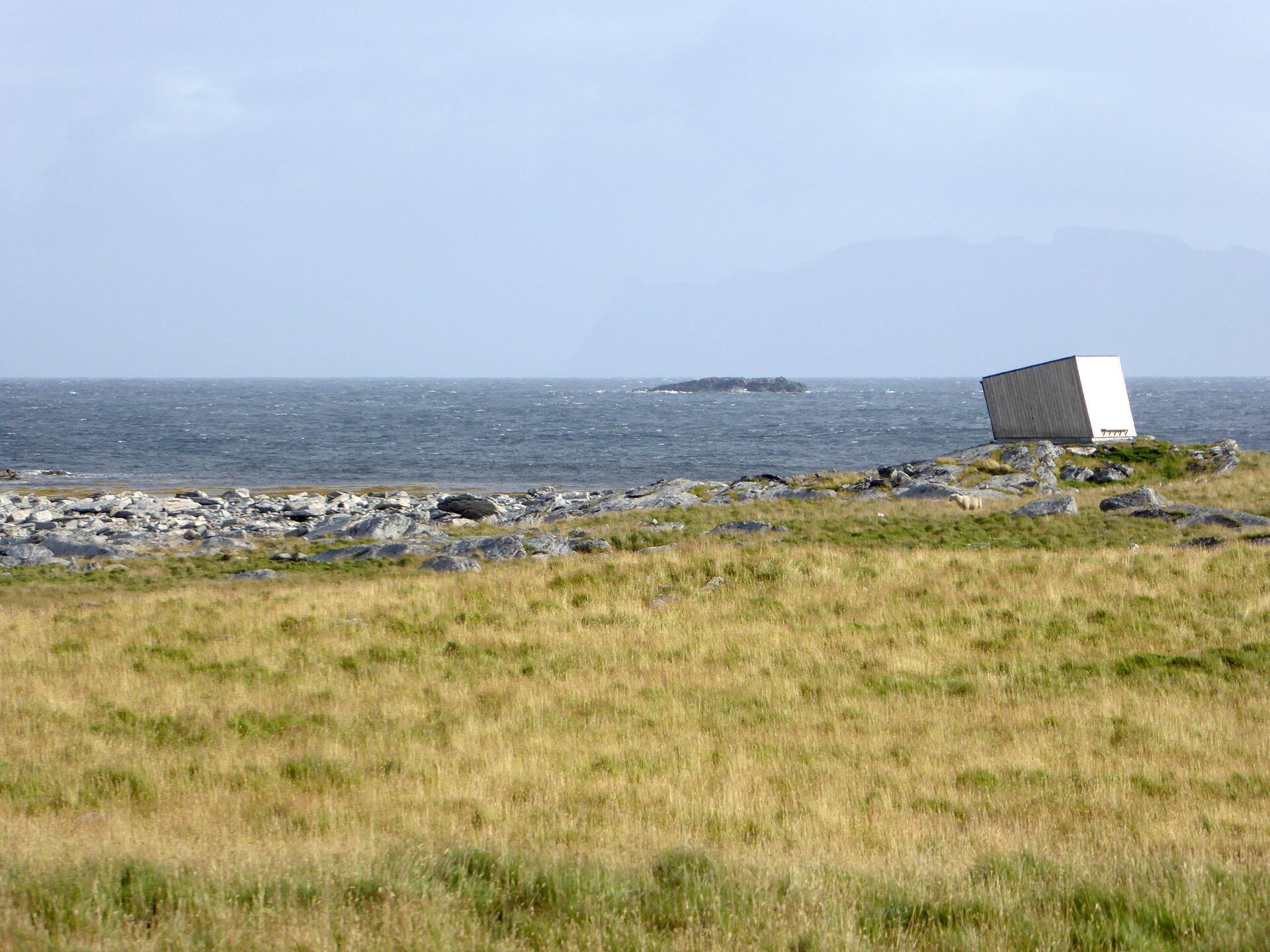
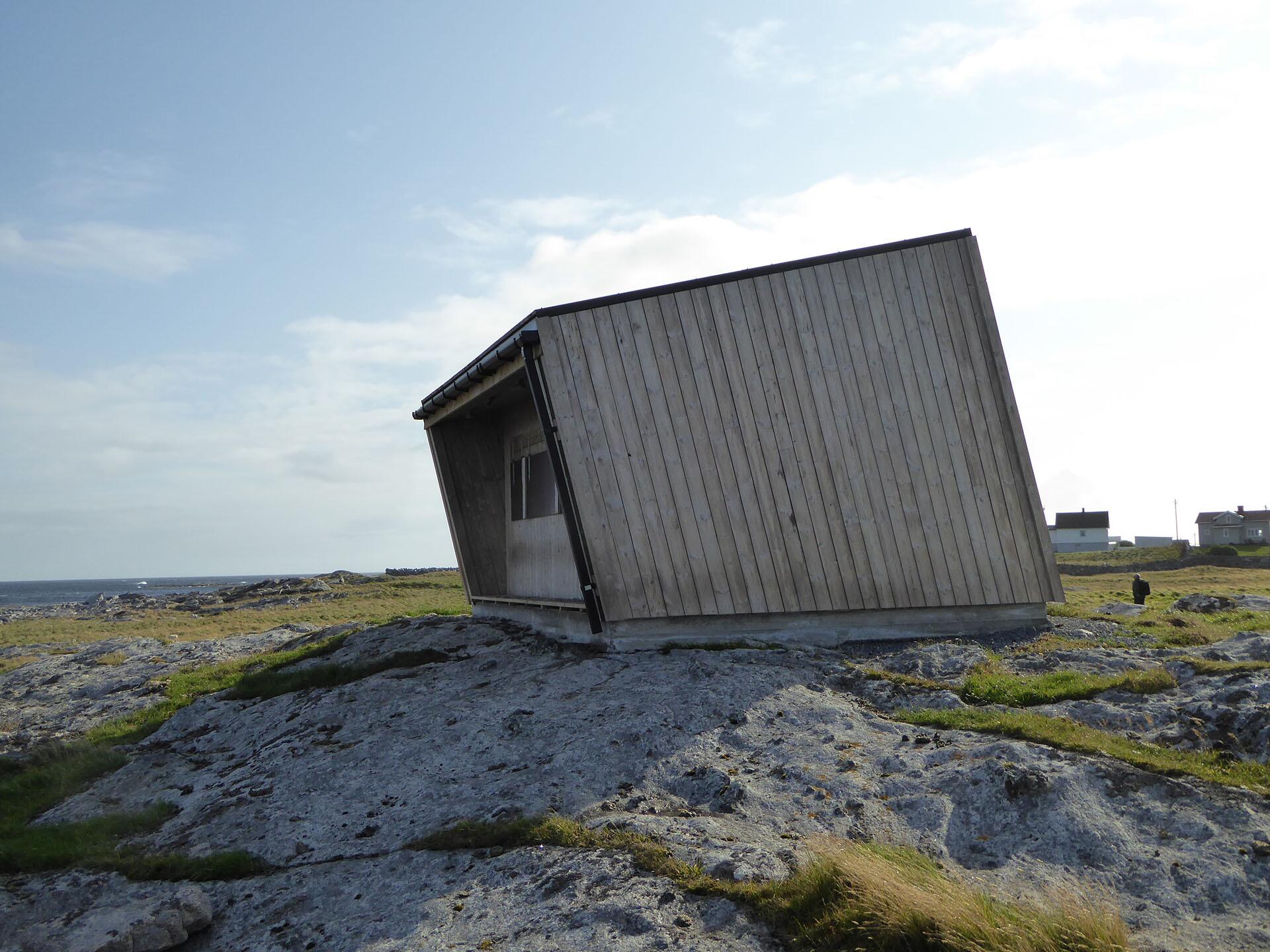
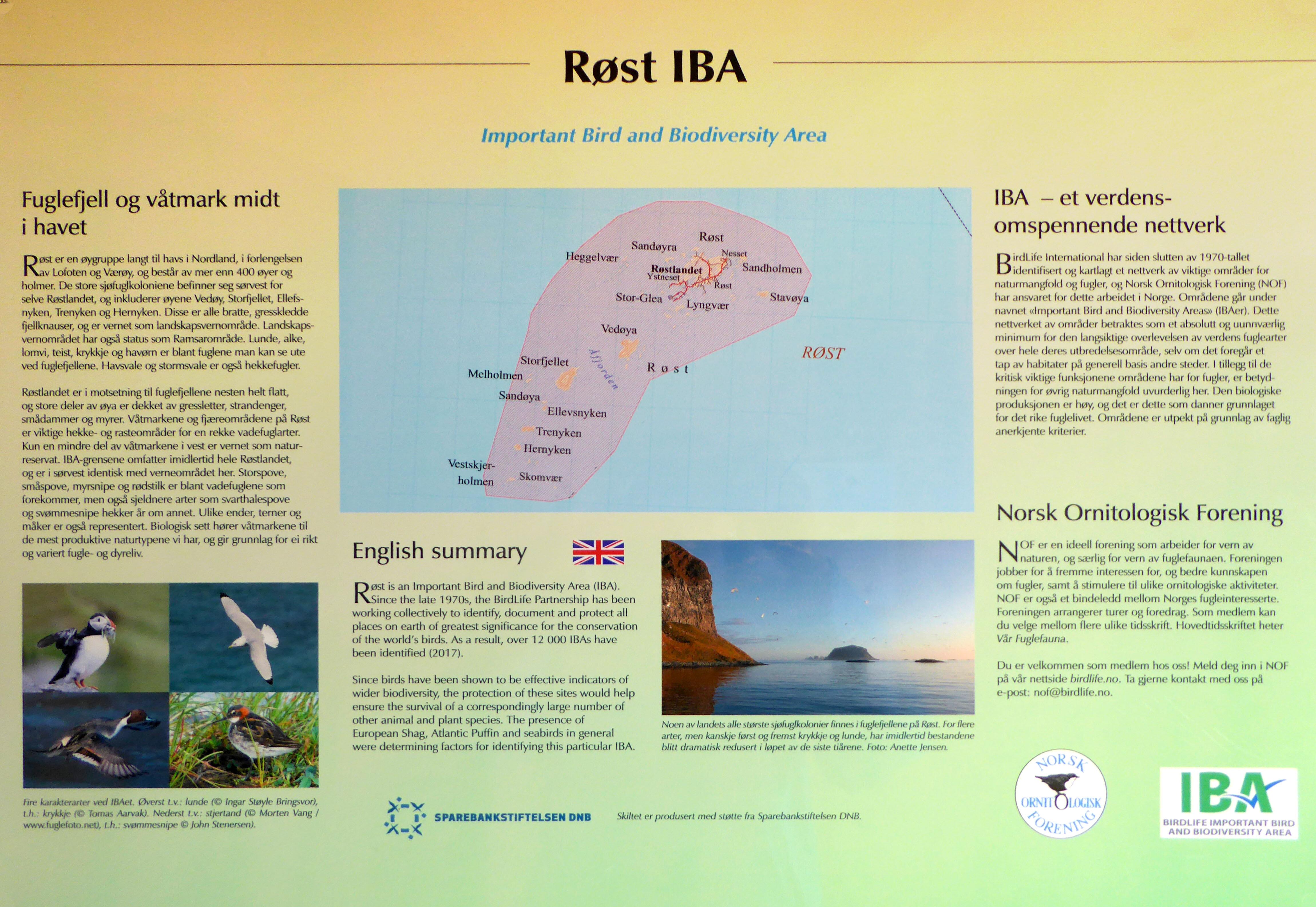
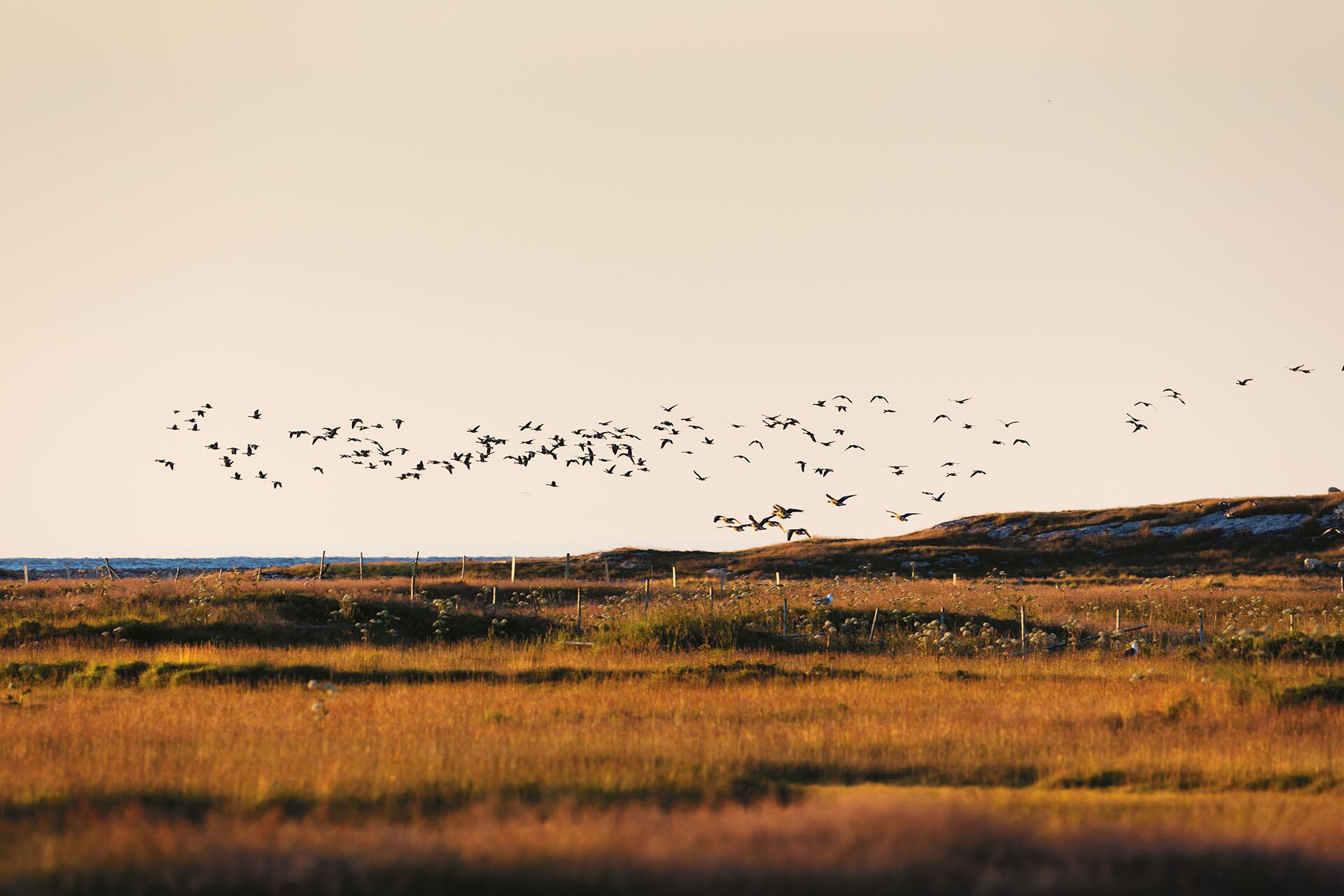

The landscape of Røst consists of flat grazing lands interspersed with marshes and countless freshwater and brackish ponds. This is in sharp contrast to the steep, towering bird cliffs which rise up from the sea to the southwest.
http://www.seapop.no/en/sites/rost.html
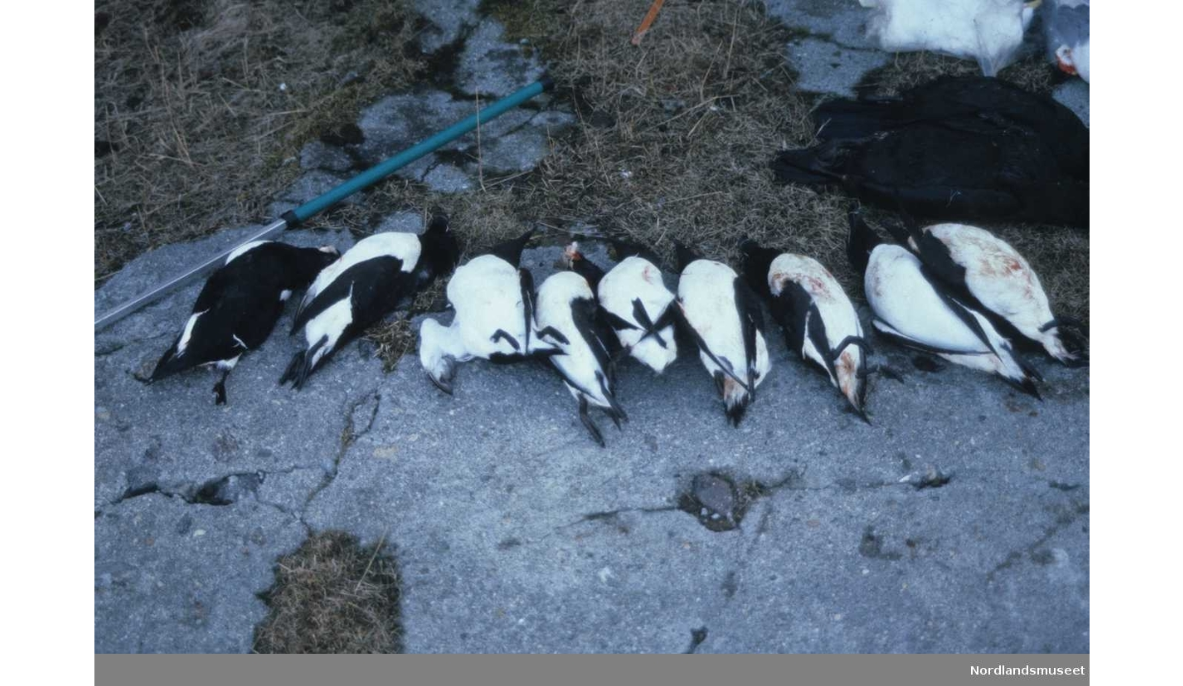
The enormous sea bird colonies have, from time immemorial, been an important source of food for the people of Røst. Eggs from gulls, teal and large birds such as auk and common murre were the only eggs available.
https://en.wikipedia.org/wiki/Guillemot
Fresh eggs for Christmas
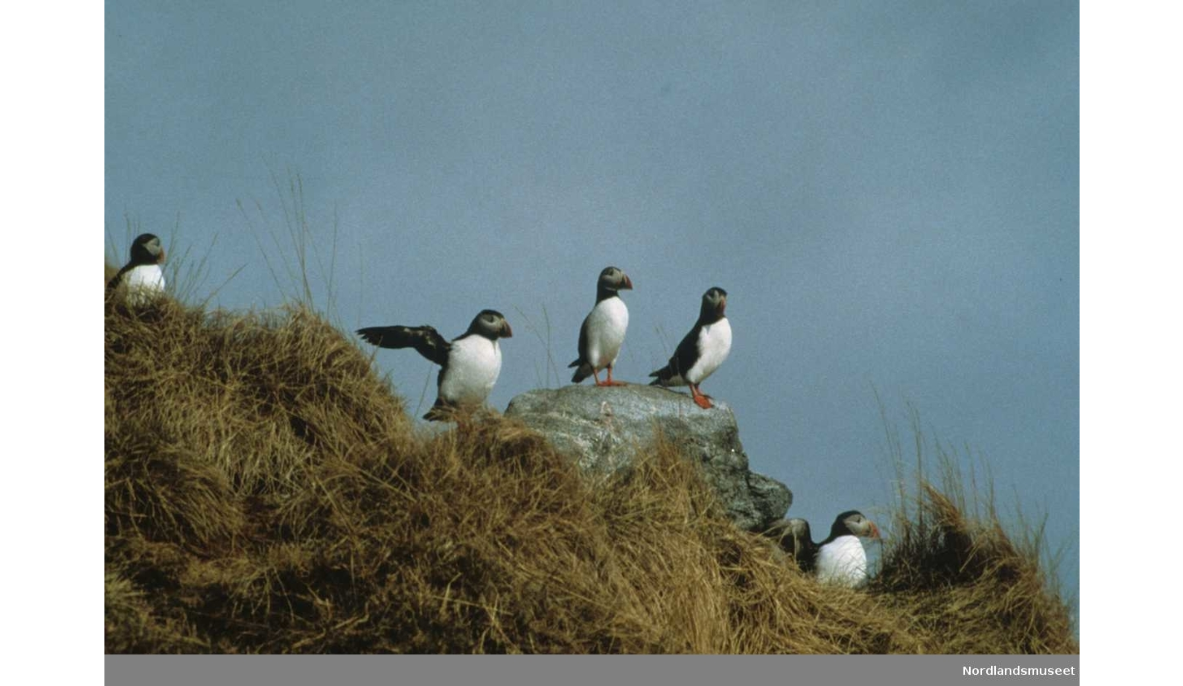
An older Røst man told how they laid out eggs in an earth cellar outside the house in the summer and had fresh eggs for Christmas. In the spring and summer, puffins and cormorant chick are salted or preserved to add to a fish rich diet, down and feather gathering also being a part of this food gathering on Røst.
https://en.wikipedia.org/wiki/Puffin
The year is divided into four bird seasons
Winter
Winter, with its mild climate, attracts species which normally have migrated from this part of world, such as starlings, curlew and redshank.
Spring
Spring comes early here and oystercatchers can be found from the beginning of March. By Easter, large flocks of common murre, auk and puffin gather at sea under the bird cliffs. Puffins nest on all cliffs, while teal have traditionally kept to Vedøya. Røstlandet is a wader area.
Summer
The summer is the time of foraging to raise chicks. It is, however, also short and many of the waders migrate south as early as July and by August the sea cliffs are quiet.
Autumn
Autumn is migration time and it is not unusual to find up to 20 different wader species on Røstlandet. Greylag goose, fieldfare and redwing are frequent visitors, while autumn storms can drive Little Auk and other seabirds towards land.
There were, until 2018, around 300 species registered in the Municipality of Røst.
https://en.wikipedia.org/wiki/Seabird
Source: Steve Baines and Tycho Anker-Nilssen: Fugler på Røst, Røst kommune, 1991.
Bird research
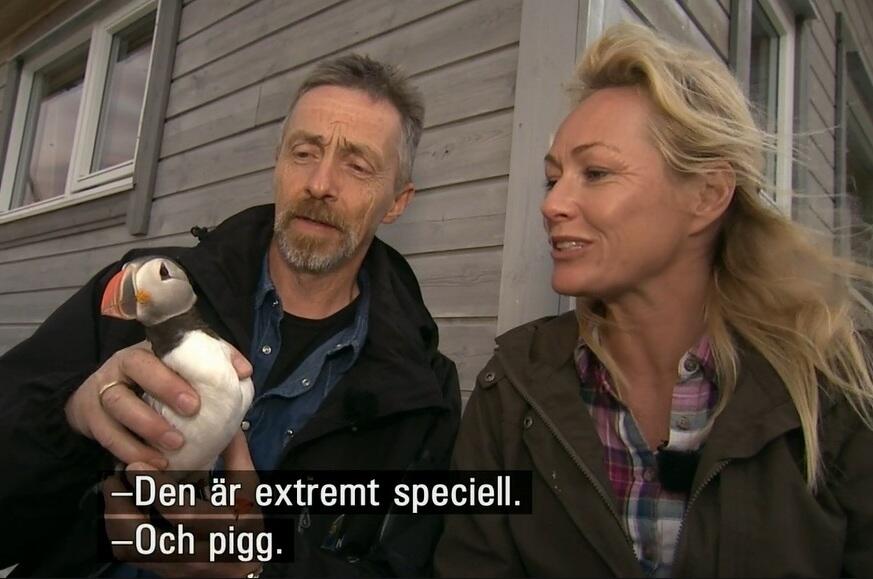
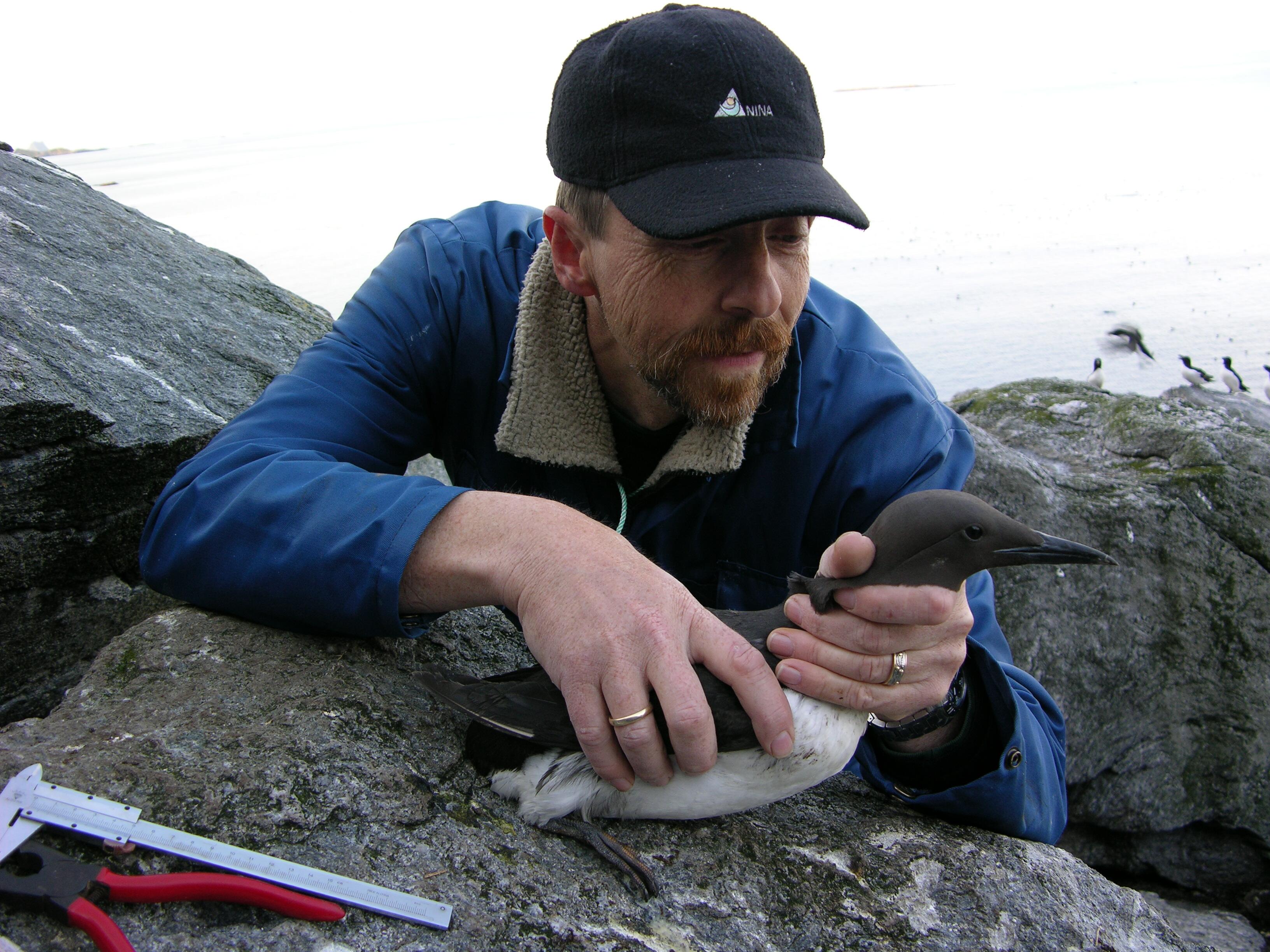
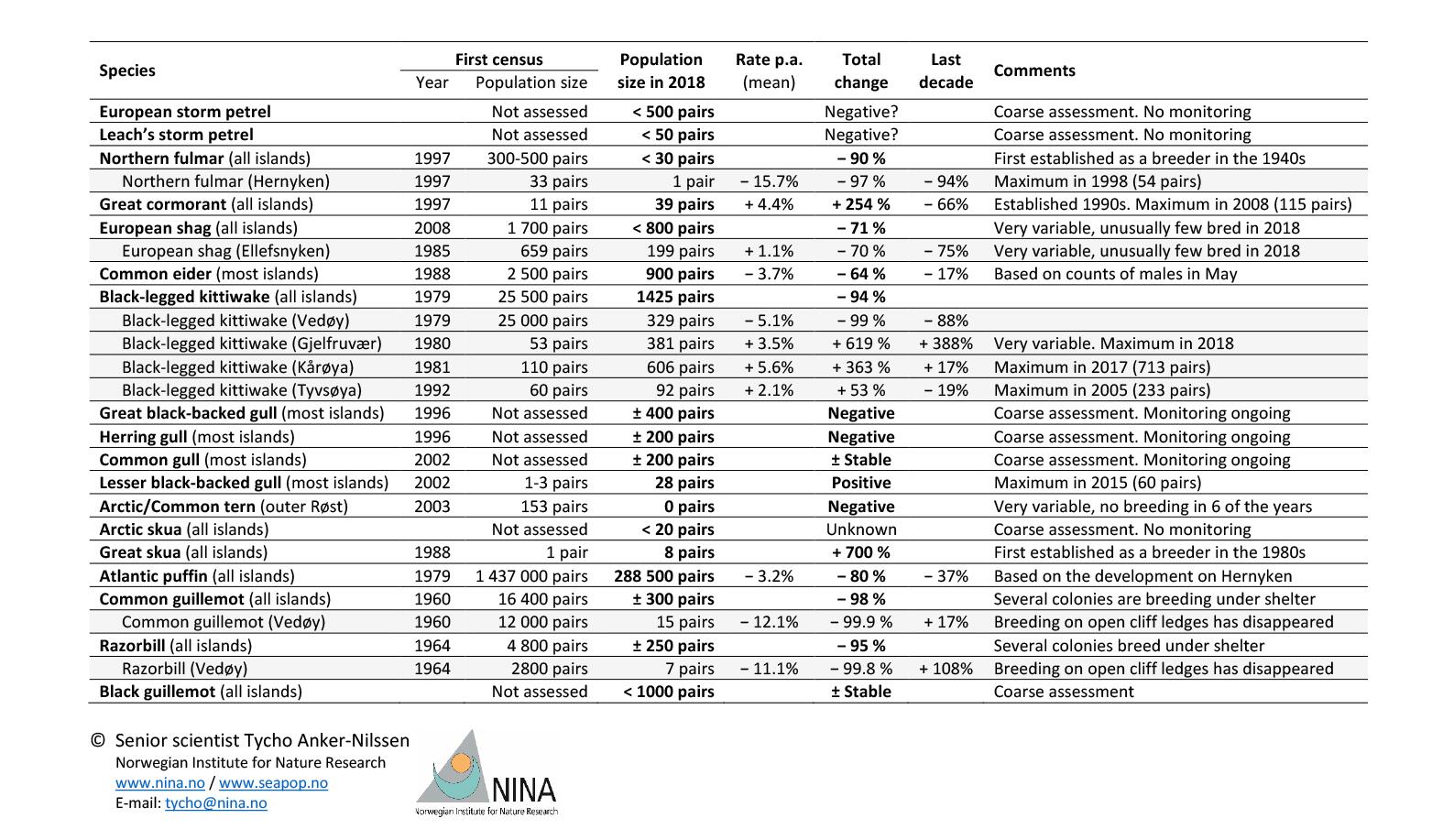
The Norwegian Institute for Nature Research (NINA) has had a research station on Røst for many decades. Researchers follow the development of seabird populations, the finds often being disquieting. Populations are falling.
There has been an 80 percent fall in the number of breeding pairs in the last 40 years – from 1.5 million to just under 300,000 sea bird pairs, 98.5% being puffin, according to Tycho Anker-Nilssen.
https://framsenteret.no/2018/03/meet-the-puffin-man
Illustrations:
The seabird watching cabin was set up in 2018 by the ornithologist Steve Baines, who has followed birds on Røst for many decades. Photo 1–3 Elisabeth Johansen, 4 and 7 Kjell Ove Storvik, 5–6, The old picture show bird foraging on cliffs. Archive: Nordlandsmuseet, 8 Jari Tarvainen/SVT, 9 NINA, 10 Figure: Tycho Anker-Nilssen, NINA
Translation to English: Alasdair Graham-Brown