




















Italy has for a long period of time been the most important market for stockfish from Røst. Direct contact between Røst and Italy is, however, a relatively new phenomena, export for a long period being via Bergen.
Export from Lofoten
Northern Norway companies began to appear after the 1800s and became increasingly more significant. J.M Johansen in Stamsund, Berg and Sons in Svolvær, H. Sverdrup on Reine and J.M. Langaas in Sund were among the well known names. Export continued for a surprisingly long period of time from Bergen, primarily because of the competence required for stockfish quality sorting was found in Bergen. Stockfish is sorted by size and special criteria. It was important to both know the different qualities and the different markets’ preferences. There was a long tradition of stockfish sorting in Bergen, carried out by stockfish sorters.
Bergen
The priest and historian Olaus Magnus writes in 1555 in his report about the Scandinavian people:
This fish from Bergen is however not one single type, but has different values depending on size and quality.
Several qualities
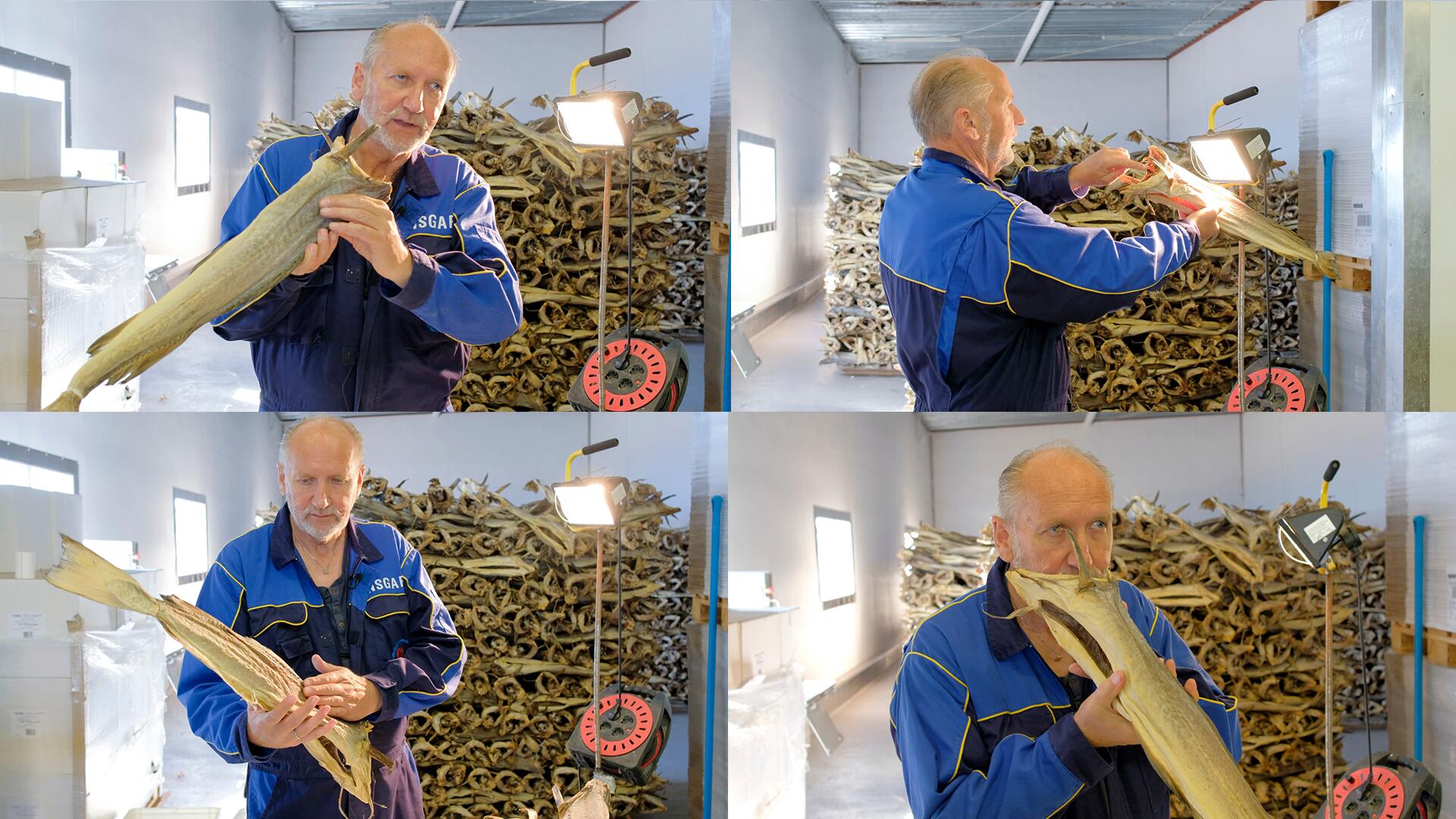
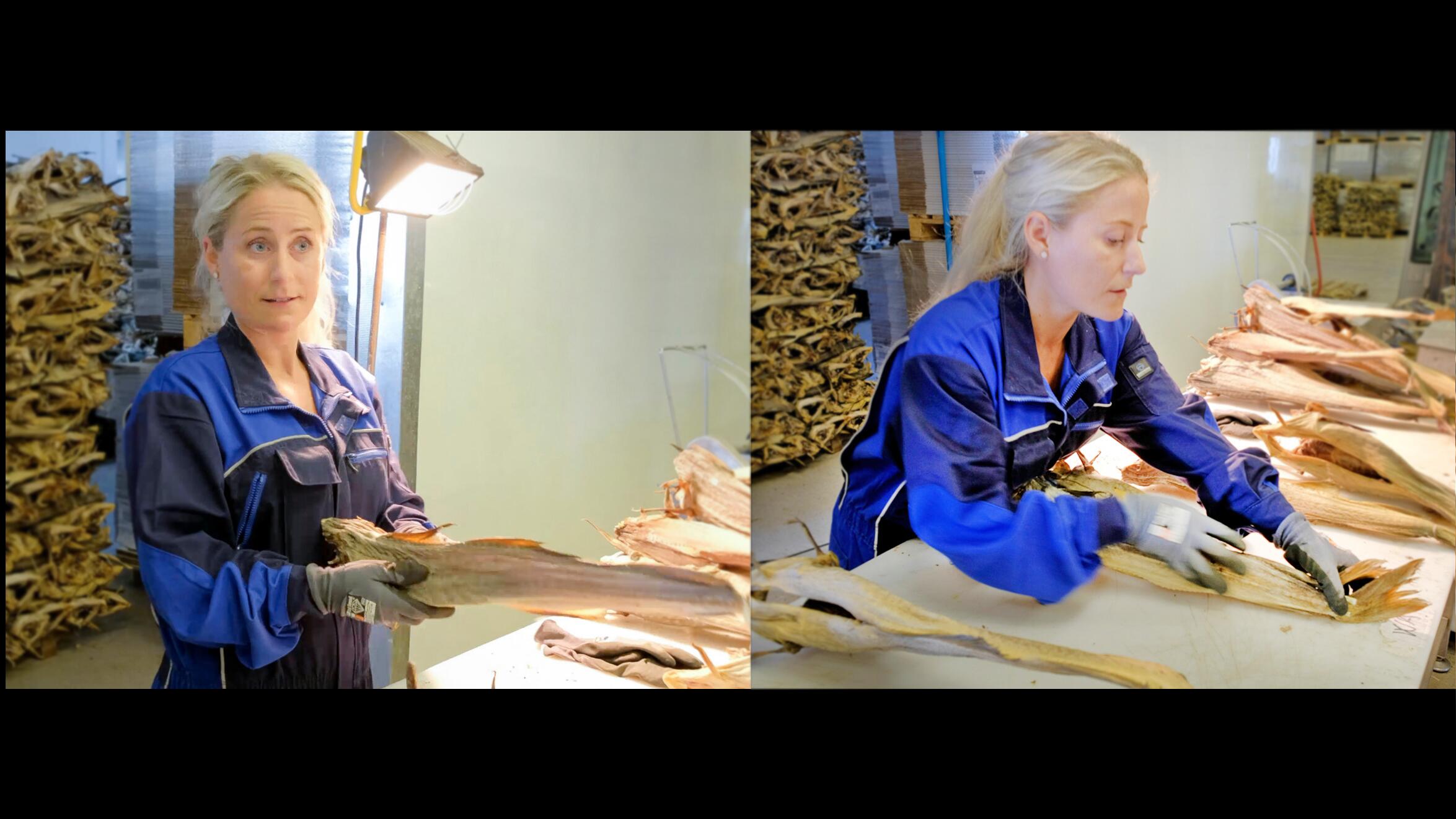
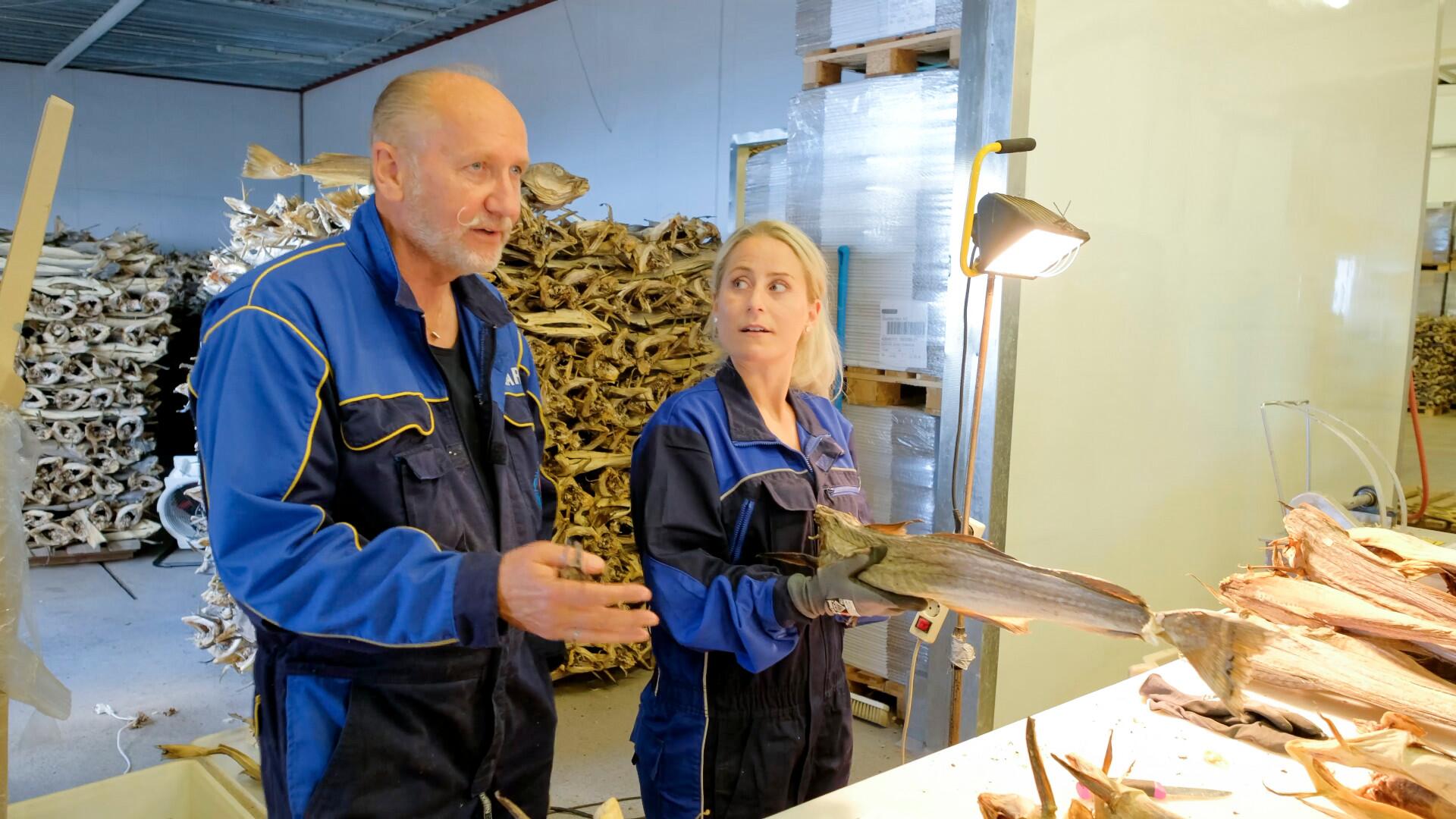
In Bergen, around 30 qualities of stockfish were eventually used. Today stockfish sorters on Røst sort the fish into 20 categories.
As for many high profile foods, stockfish years vary depending on a number of factors. The weather during drying plays a major role. So does the food the Atlantic cod has fed on before the catch and the catch and production method before being hung.
Rain and frost
The fish is hung with the back turned towards the most humid wind direction, so that it dries thoroughly. Stockfish is also very sensitive to frost, particularly early in the drying process. There is always therefore a great deal of expectation around the quality of the year’s production.
Stockfish sorter from Bergen
The fishing settlement owner in Sund on Lofoten, Johan Langaas, managed in the early 1900s to break Bergen’s export monopoly by bringing in a stockfish sorter from Bergen who began to train the local people in the art of sorting. This training formed the humble beginnings of stockfish sorting in Lofoten, which was essential for the later direct export from Lofoten.
Regulation of the fish export
The Dried and Salted Cod Act, which regulated the export of dried and salted cod, was in 1937 expanded to include stockfish. The Norwegian stockfish exporters’ national association was founded in the same year, export licences being linked to association membership. The association was dominated for many years by the Bergen companies. However, in 1985, they were forced to give up their reserved places on the board.
The first company from Røst to acquire NTL membership and export rights was AS Glea in the middle of 1960s.
Original text: from Elisabeth Johansen, Anne Cecilie Pedersen, Einar Stamnes (2018)
Tørrfisk – kystkultur, kokekunst, Querini. Stamsund: Orkana forlag.
Translation to English: Alasdair Graham-Brown
Reference work:
Berge, Geir. (1996) Tørrfisk. Thi handlet du red’lig og tørket din fisk. Stamsund: Orkana Forlag
Gjertsen, Georg. (1949) Våre fisketilvirkere i Lofoten og Vesterålen. Stokmarknes: Stokmarknes Aktietrykkeri.
Magnus, Olaus. (ny utgave 2010) Historien om de nordiska folken. Hedemora: Michalisgillet og Gidlunds förlag.
Tande, Thorvald sr. og Thorvald Tande jr. (1986) Norsk tørrfisknærings historie. Norges tørrfiskeksportørers forening
Illustrations:
From Bryggen in Bergen. Photo: Andreas B. Wilse / Wikipedia CC BY 2.0.
Transportation of stockfish, from Olaus Magnus
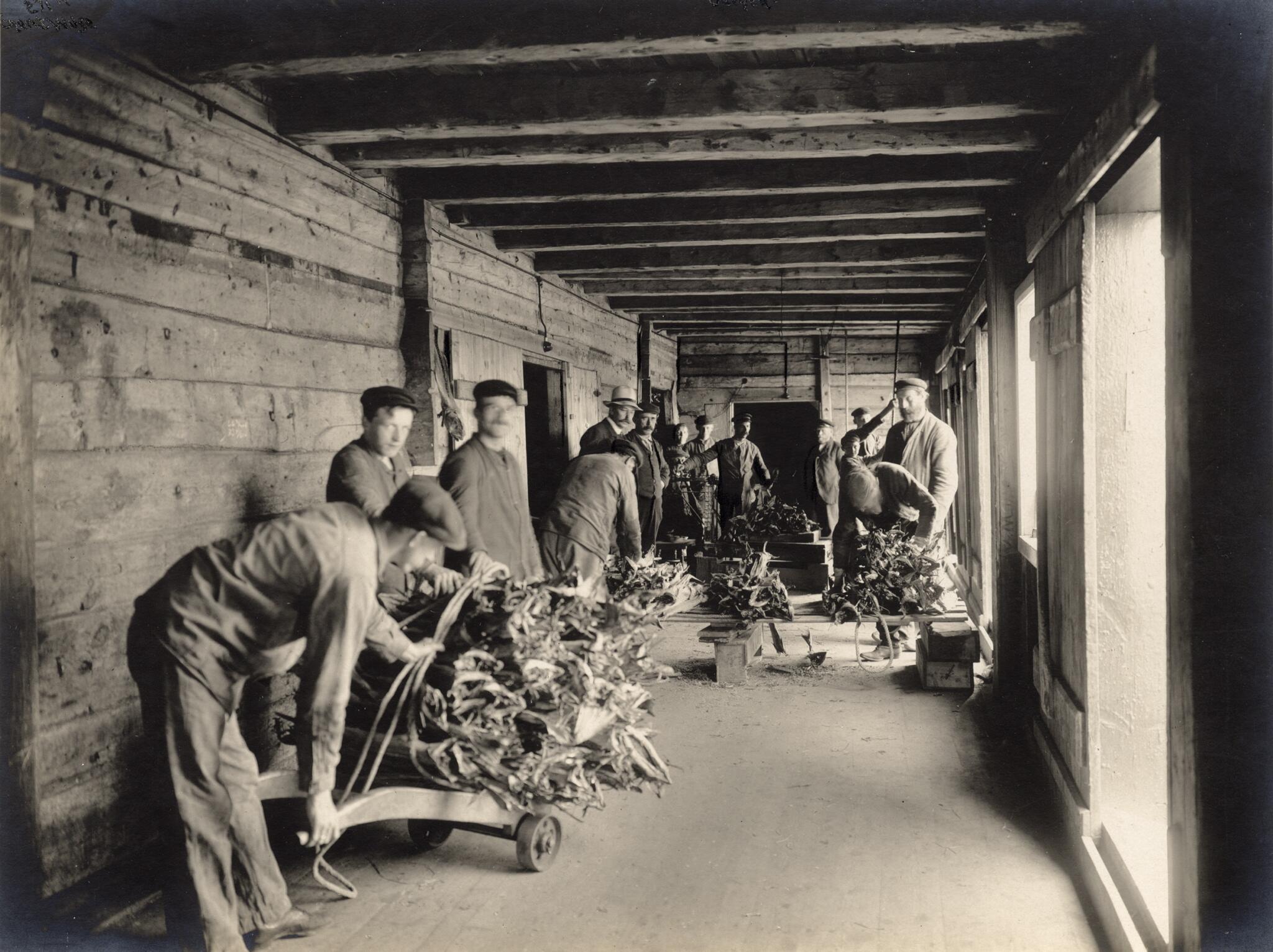
Loading of stockfish, photo: Nordlandsmuseet
Today stockfish sorters on Røst sort the fish into 20 categories, the sorters Ansgar Pedersen and Line Evjen, photo: Kjell Ove Storvik