




















We have a very important eyewitness report of trade in stockfish to Bergen and life in the fishing and farming community on Røst in the 1400s. It is a story about the Venetian merchant and nobleman Pietro Querini and the crew of his trading ship that became stranded on Røst’s cliffs in January 1432. Querini wrote his version of the journey and the crew dictated their stories to a writer in Venice. The tales are found in the Vatican Library in Rome and are translated into a number of languages, including Norwegian.
https://en.wikipedia.org/wiki/Pietro_Querini
‘La Querina’
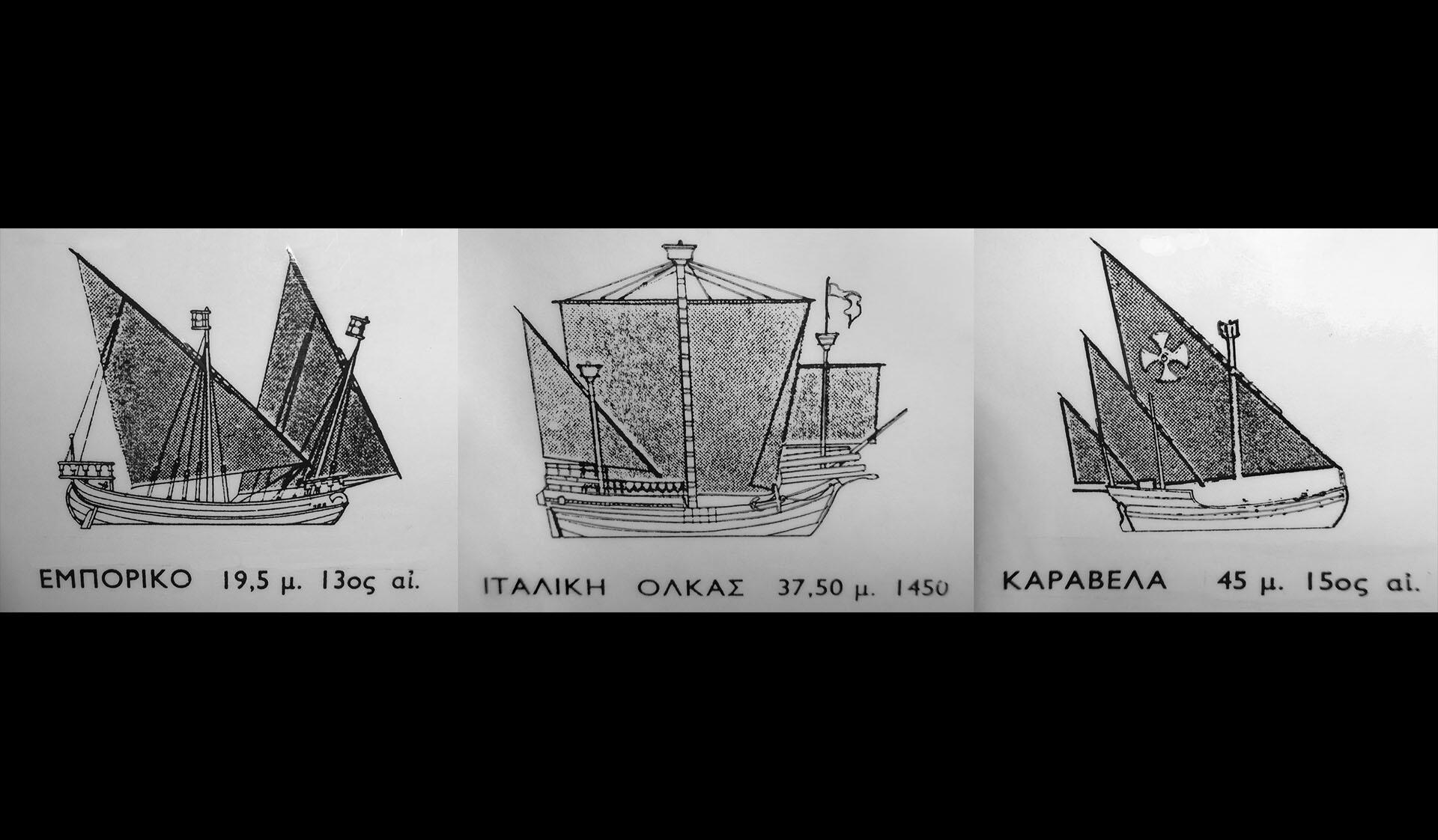
The Venetian ship ‘La Querina’ left Crete with a crew of 68 on 25 April 1431. ‘La Querina’ was a large cog of seven hundred barrels, loaded with wine, herbs and spices, cotton and other valuable goods. The planned destination port was Flanders, probably Brügge. The ship, however, met bad weather and began to drift northwards up through the Irish Sea and onwards out into the northern Atlantic ocean. On 17 December 1431, the crew abandoned ship for the two lifeboats. Their voyage in small boats in unknown, cold and threatening waters would be long and horrifying. Only one of the lifeboats reached land.
A deserted place?
The seafarers, despite beaching at an apparently deserted place far north, were rescued by local fishermen farmers who were in fact a branch of the same trading network which the Venetian’s belonged to. They had come to what was the very outer limit the known world, seen from Venice, where the people produce stockfish, a trading good which allows them to buy many goods from elsewhere.
https://en.wikipedia.org/wiki/Venice
‘Stockfish dries in the sun and wind without salt’
They were taken well care of on Røst by the local population. Querini tells that Røst’s inhabitants keep livestock, each farm having cows which provide milk and tame ducks, eider, which provide eggs and down in the spring. It is however the fish which is their bread and butter.
Querini says
They, in the course of the year, catch an enormous amount fish, but only two types. One, which is found in large, yes even immeasurable amounts, is called ‘Stocfisi’. The other, flounder, is less numerous, but of a surprising size, up to 200 pounds each.
They dry the stockfish in the sun and wind without salt and, because it has little liquid fat, becomes as hard as wood. When they eat it, they hammer it with the backside of an axe, which makes it threadlike and sinewy. Then they spread butter and herbs and spices on it to give it taste. Stockfish is a large and valuable trading product on Germany's sea and for export to Germany.
Venetian merchants
Stockfish was not introduced to Italy by Querini. This is a myth. The story is, however, no less interesting for this. Venetian merchants traded in England and Flanders where stockfish was an important good. It was therefore well know as a trading good, as Querini’s text also implies. Querini and the crew were, however, the first Venetian eyewitnesses of how and where stockfish was produced.Adding herbs and spices may indicate that it was an ingredient in a prepared warm dish. Using stockfish almost as a wafer bread with butter is an old tradition which still lives on in Iceland and the Faroe islands. It is a common snack in Iceland, harðfiskur með smjöri. In The Faroe Islands, the blubber of pilot whales is used with the stockfish.
Herbs and spices
What, however, was unique on Røst, as Querini mentions, is that they used herbs and spices. He does not, however, state which herbs and spices they used. Little of these were grown on Røst, as Querini and the crew mention, except perhaps some traditional plants such as angelica and onion. Querini and his people were well known for trading in herbs and spices, Venice dominating the herbs and spice trading in the eastern Mediterranean for a long period of time. The tale and archaeological finds however both show that people on Røst had the opportunity to buy luxury items in Bergen, which herbs and spices were. A range of herbs and spices were available in the Hanse area, including cinnamon, pepper and ginger, many of the stockfish dishes from the Middle Ages also being based on exotic herbs and spices.
Map from 1450
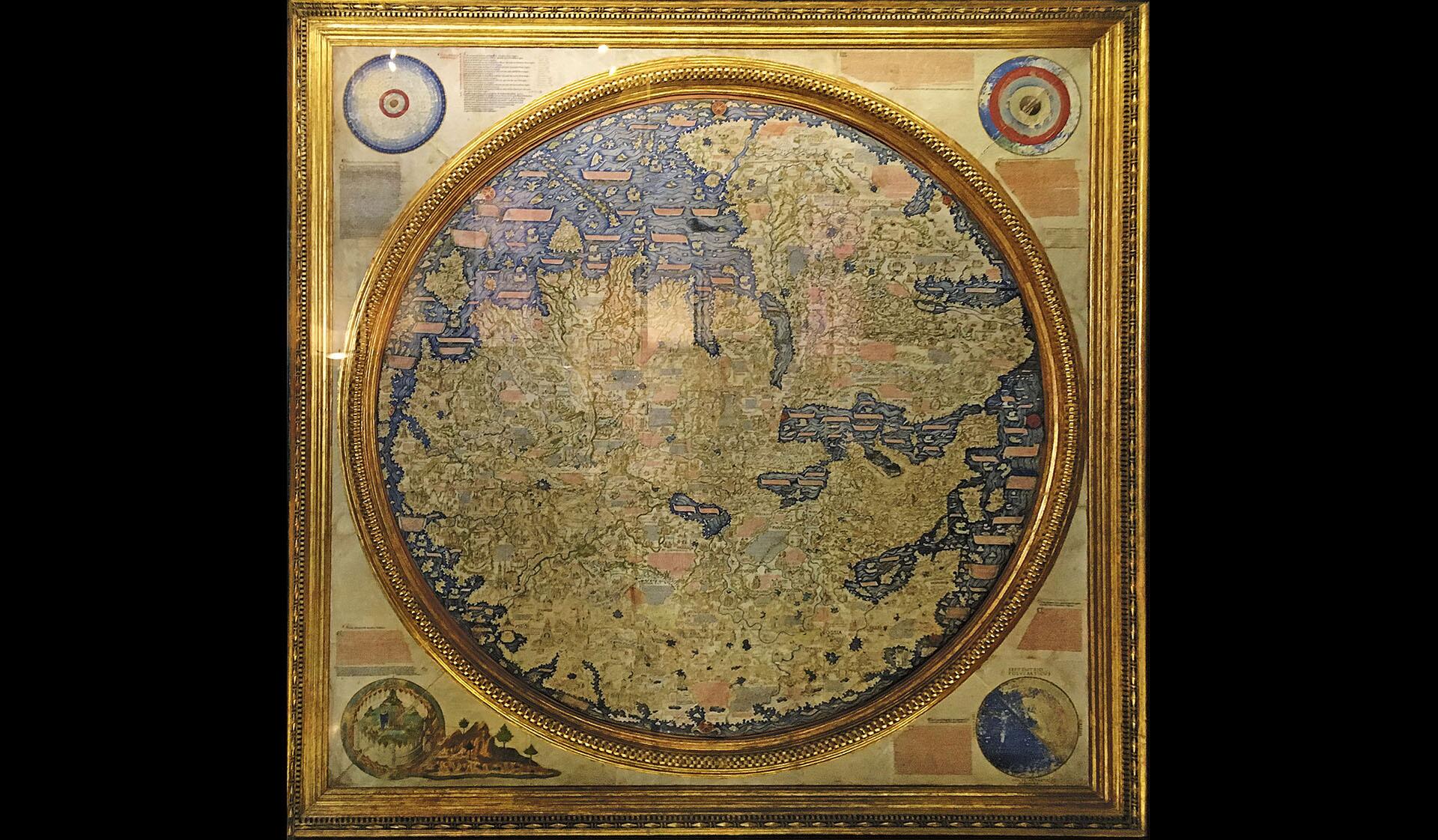
Knowledge of Norway and Røst was communicated to Venice after the tales of these voyages became known. There is an interesting document from Querini’s time of how the world was seen from Venice. The world map of Brother Mauro of St. Michael’s monastery in Murano in Venice was dawn around 1450. It is today displayed in Museo Correr in Venice. Mauro, who had been a merchant, obtained the information needed to draw the map from Venetian merchants, Querini’s voyage in fact being mentioned on it. Querini or someone close to him was probably the source of the information on map.
https://en.wikipedia.org/wiki/Museo_Correr
Stockfish may have been introduced to Italy from several directions. Southern Germany had an early stockfish tradition, and it is not far from here to Italy. Most of the stockfish must, however, have arrived by sea. Italian seafarers knew of stockfish as a provision and trading good in Flanders and Holland. They could have introduced stockfish to the Italian port towns. Italian areas with stockfish traditions all have important harbours, such as the ports of Genova in Liguria, Livorno in Toscana, Napoli in Campania, Messina in Sicilia, Reggio in Calabria, Brindisi in Puglia, Ancona in Marche, Venice in Veneto and Trieste in Friuli–Venezia Giulia on the border with Slovakia.
https://en.wikipedia.org/wiki/Messina
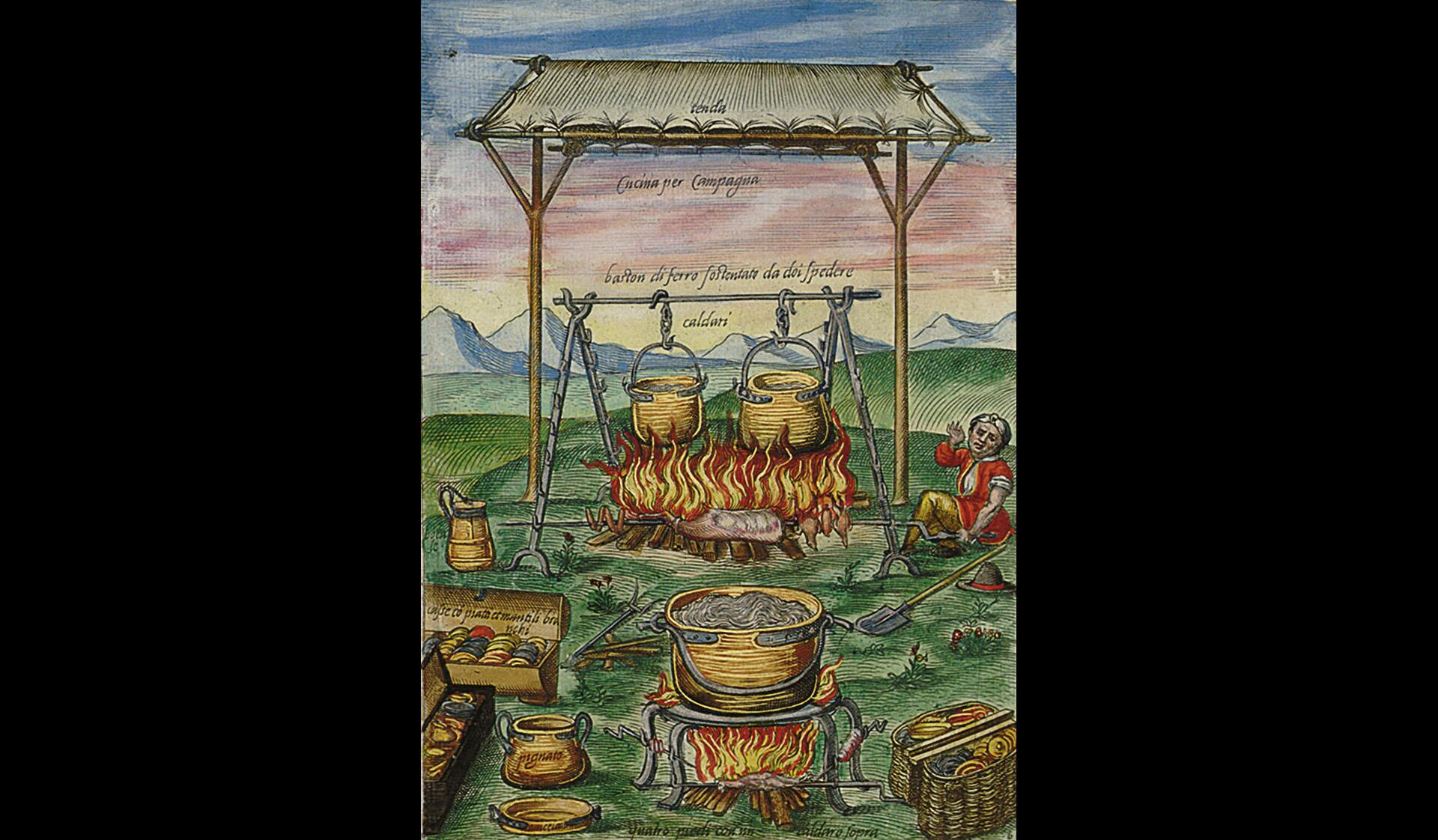
We know for certain that stockfish was known as a food in Italy in the 1500s, the recipe book of the papal chef Bartolomeo Scappis from 1570 mentioning a number of stockfish dishes.
To Bergen with stockfish
‘In May they departed from the island in a large boat of fifty barrels’, Pietro Querini states in his tale from Røst from 1432. The tale informs us that the boat was skippered by their host on Røst, who was a fisherman, his three sons and some other relatives. The boat was therefore sailed to Bergen by Røst inhabitants. This is the first report we know of local fishermen themselves transporting stockfish from the north southwards. This is probably an example of the organising within the community which later was known as the ‘jektefarten’ transport of goods from North Norway, the so called ‘bygdefaret’.
Local fishermen transporting stockfish
The skipper who owned the boat was ideally from that place, Querini stating that the skipper was their host, a local fisherman. The skipper had an agreement with others to transport the stockfish they had produced to Bergen for a fee. The crew, the so called ‘håsetene’, were representatives of the local fishermen.
Querini says:
Loaded with fish, they sailed to somewhere in Norway more than a thousand miles away called Berge. Similarly ships of three hundred to three hundred and fifty barrels arrive here from many places, loaded with all sorts of goods brought from Germany, England, Scotland and Prussia, everything that is required to live and clothe oneself. Those who come with fish (and there are countless boats) exchange fish for goods they need …
Querini tells about the approaching departure in May:
… had a woman married to the man who controlled all the islands, but who was away, heard about us stranding somewhere out there. She sent his deputy in a boat rowed with twelve oars, and on behalf of the woman he delivered to me, standing above the others, sixty stockfish dried in the wind and three large rye bread as round as ourselves ...
The deputy, a German monk, demanded that Querini and the crew pay for their stay on Røst. They gave him some silver objects in payment. ‘The monk travelled with us to visit the archbishop and to give him his share of this bounty’, says Querini.
The country’s largest stockfish exporter
We know that in the 1500’s the archdiocese was actually the country’s largest stockfish exporter and therefore earned significant sums on stockfish trading and had the so called ‘setesvein’ on Røst, which agrees well with Querini’s description. Tithes, fines and fees were often paid to the church in kind. It is well-known from the sources that ‘setesveinen’ on Røst in 1521 were directly involved in stockfish trading with Bergen. We also know that there were nobleman’s rights on Røst which include catching rights and which probably included ownership of some farms. This gives us an insight into the power structure in the community at that time. It was important to signal power and presence on an island which was, due to the stockfish, important.
At the end of May
Querini, his people and the archbishop’s man were therefore onboard the cargo ship loaded with stockfish that departed from Røst at the end of May. We do not know what type of boat this was. The crew tells us that the boat was rowed through the sound and then sailed on more open stretches.
Querini tells about an interesting meeting on the way south:
On this journey, we met the archbishop who the monk was to visit and who was the head of all these places and the islands. He was called Archiepiscopus Trunduniensis. He was accompanied by two whaling ships and more than two hundred people.
The man they met was Aslak Bolt, the archbishop and the country’s largest stockfish merchant.
Original text: from Elisabeth Johansen, Anne Cecilie Pedersen, Einar Stamnes (2018) Tørrfisk – kystkultur, kokekunst, Querini. Stamsund: Orkana forlag.
Reference work:
Berge, Geir. (1996) Tørrfisk. Thi handlet du red’lig og tørket din fisk. Stamsund: Orkana Forlag
Bertelsen, Reidar (1978) Lofoten og Vesterålens historie 1500–1700. Stavanger: Dreyer a/s
Harwood, Jeremy. (2010) To the ends of the Earth: 100 Maps that changed the Earth. London: David & Charles
Joensen, Jóan Pauli (2015) Bot og Biti. Matur og matarahald i Føroyum. Tórshavn: Faroe University Press.
Magnus, Olaus. (ny utgave 2010) Historien om de nordiska folken. Hedemora: Michalisgillet og Gidlunds förlag.
Nielssen, Alf Ragnar (red.) (2014) “Fangstmenn, fiskerbønder og værfolk” i Norges fiskeri og kysthistorie. Bind 1. Bergen: Fagbokforlaget
Sølvberg, Ingvild Øye. (red.) (1980) Mat og drikke i middelalderen. Bergen: Bryggens Museum
Wallem, Fredrik M. (1893) Handelen med Tørfisk og Klipfisk. Kristiania: Fabritius
Wold, Helge A. (2004) Querinis reise. Il viaggio di Querini. Stamsund: Orkana Forlag
Translation to English: Alasdair Graham-Brown
Illustrations:
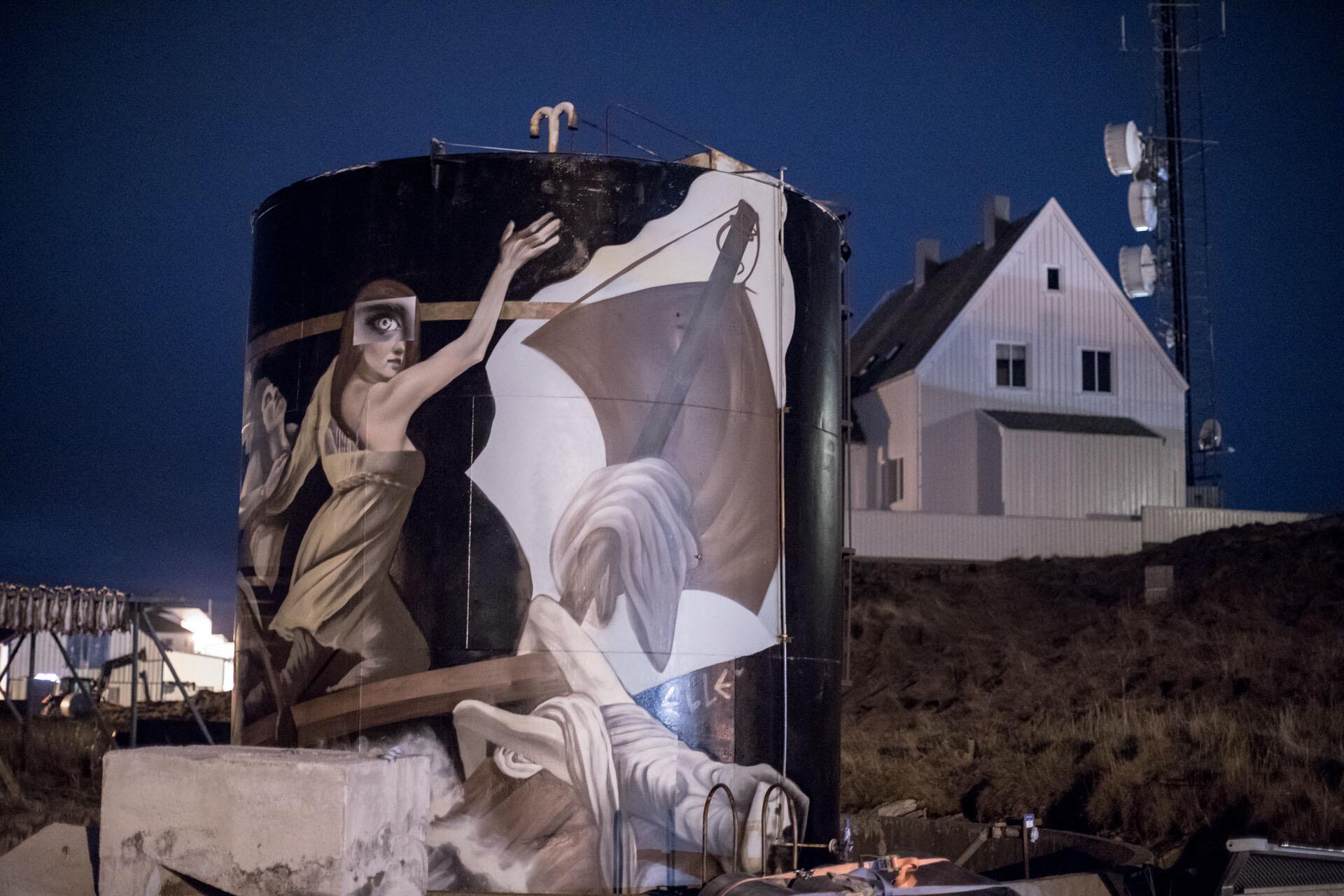
UpNorth street art with motif from Querini’s shipwreck, Glea. Photo: Kjell Ove Storvik
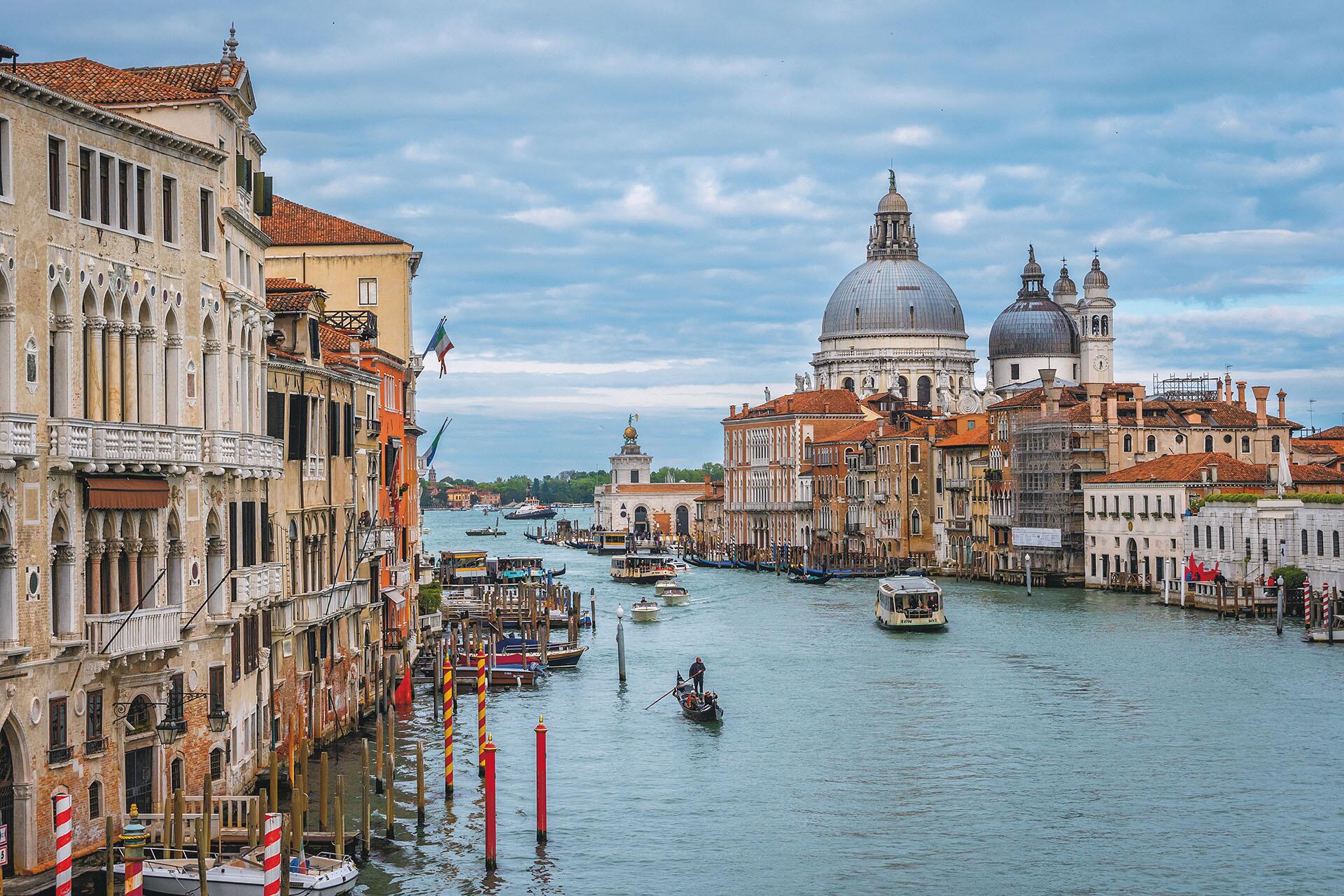
Venezia was built on trade and shipping. Here from Canal Grande. Photo: Alex West / Stockphoto
Brother Mauro's map of the world from the 1450s. On the excerpt is printed the text 'As is known, Piero Querini came ashore in the province of Norway'. Photo: Elisabeth Johansen
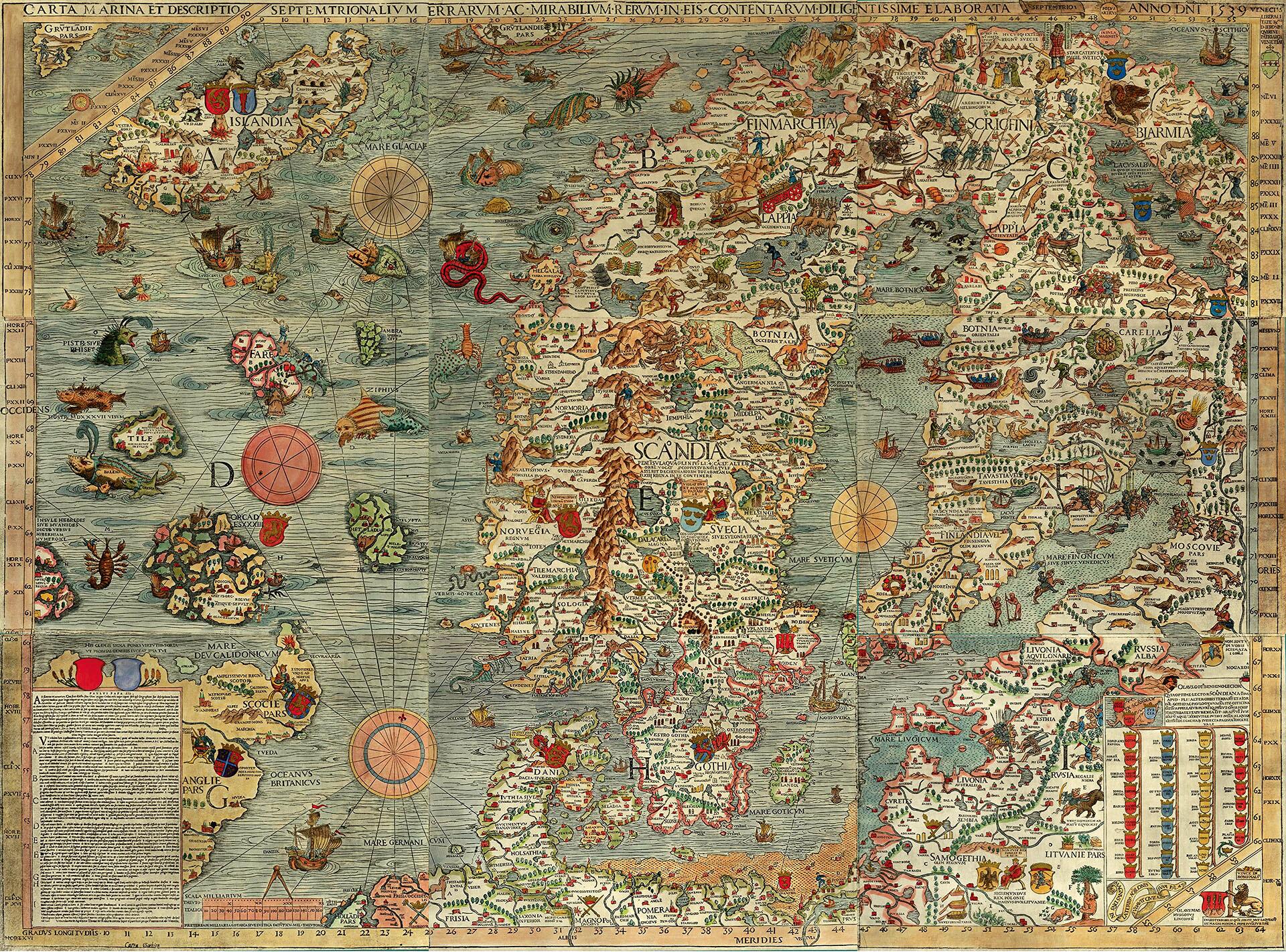
Olaus Magnus' 'Carta Marina' from 1539 shows terrible conditions including in Northern Norway. Excerpt, Carta Marina Wikimedia Commons
From Bartholomeo Scappi’s cookbook Opera. Photo: Wikimedia Commons
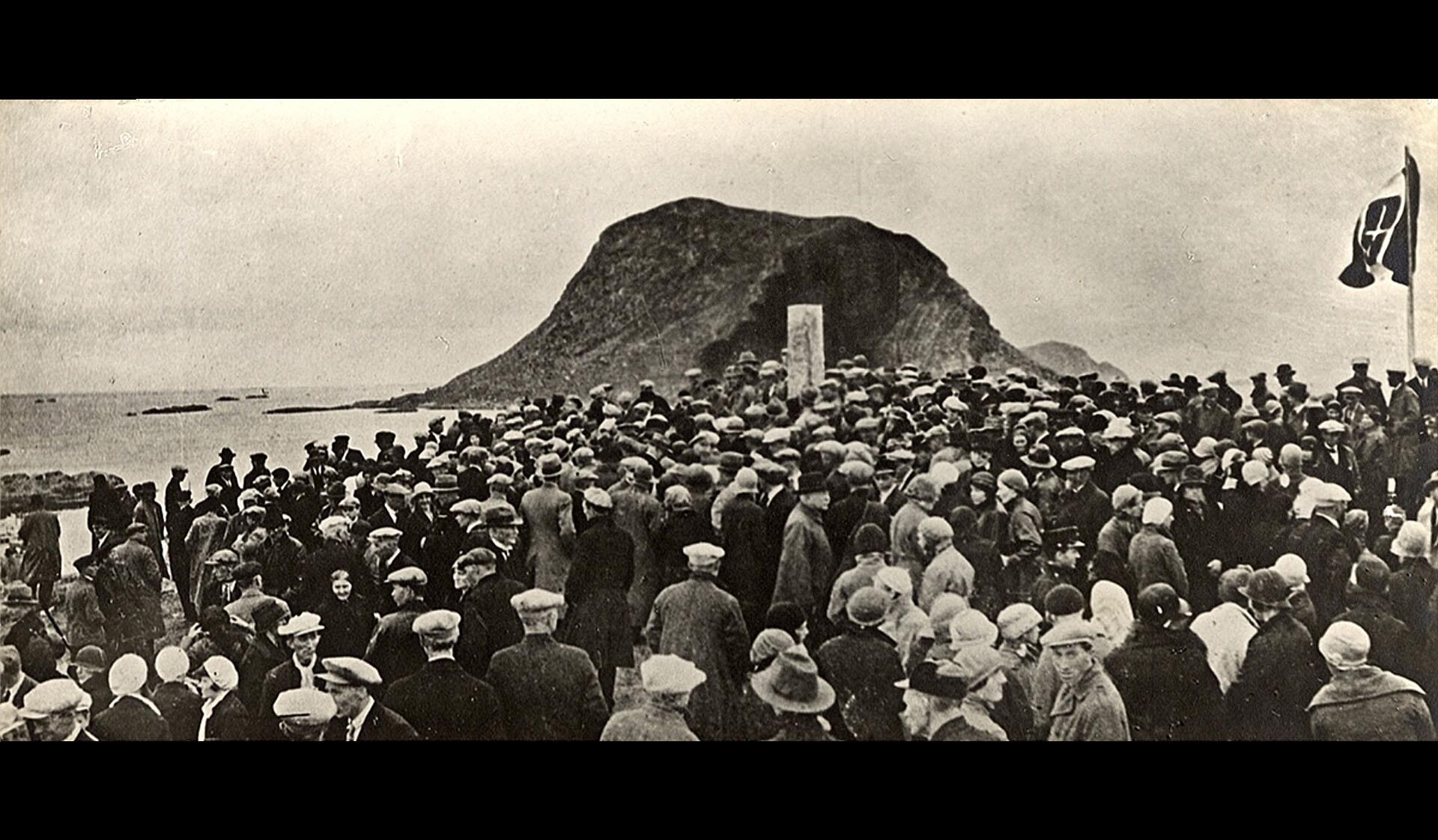
From the unveiling of the memorial monument on Sandøya in 1932, 500 years after Querini was shipwrecked. Photo: Nordlandsmuseet
Three types of ships from exhibition at the Maritime Museum in Chania in Crete. Photo: Elisabeth Johansen